
Deputy Prime Minister Tran Hong Ha has approved an ambitious project to expand and establish marine protected areas (MPAs), fishery resource conservation zones, and marine ecosystem restoration areas in Vietnam by 2030. The initiative aims to increase the total area of marine and coastal protected zones to 6 per cent of the country’s natural marine area, contributing to biodiversity conservation and the sustainable development of marine resources.
The project seeks to effectively manage and protect marine, coastal, and island ecosystems, while proactively responding to climate change and rising sea levels. It also focuses on developing a sustainable marine economy that aligns with national defense, security, and sovereignty objectives, reinforcing Vietnam’s position as a strong maritime nation.
As part of the plan, 27 MPAs covering over 442,230 hectares will be established, expanded, and effectively managed, increasing the total area of marine protected zones to approximately 0.5 per cent of Vietnam’s natural marine area. The project also targets the management of 59 fishery resource conservation zones and 63 temporary no-fishing zones in marine areas. These measures are designed to protect spawning grounds and habitats for juvenile aquatic species, ensuring that conservation zones encompass over 2.5 per cent of the marine area.
Additionally, the project will introduce areas with effective conservation measures, covering around 0.5 per cent of the marine area, and expand zones designated for marine ecosystem restoration to approximately 1 per cent of the total marine area. Efforts will also focus on Ramsar sites, wetland conservation zones, and significant coastal wetlands, which are expected to account for 1.5 per cent of the country’s natural marine area.
Vietnam currently has 16 national marine protected areas located within the coastal waters of 12 provinces, primarily concentrated in near-shore regions. The Nam Yet Marine Protected Area in Truong Sa Island District, Khanh Hoa Province, is the farthest offshore, while the Bach Long Vi Marine Protected Area in the Gulf of Tonkin represents the farthest offshore MPA in that region. Together, these areas account for approximately 0.24 per cent of Vietnam’s marine area.
Of the 16 MPAs included in the national plans, 11 have established management boards. These efforts reflect the country’s commitment to protecting marine biodiversity and ensuring the sustainable use of its valuable marine resources.
Source and Photo Credit: Vietnam News
 Image
Image 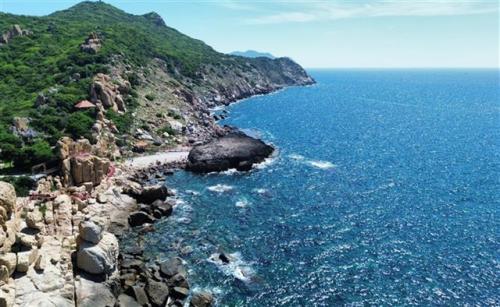




Foreign Affairs Office, The Government Public Relations Department
9 Rama VI Road, Bangkok 10400, Thailand
Tel : (+66) 2618 2323


