
Singapore’s Parliament has passed the Online Criminal Harms Act (OCHA), giving the government stronger powers to act against scams and malicious cyber activities. The law, which came into force in February 2024, allows authorities to order platforms such as Meta to remove accounts, block websites, disable apps, or restrict access to harmful content suspected of being used for criminal purposes.
For the first time under OCHA, the police have issued a directive to Meta, requiring tougher measures to curb scams on Facebook. The order targets scam advertisements, fake accounts, and pages impersonating government officials. Failure to comply could result in fines of up to $1 million.
The move was announced on September 3 by Minister of State for Home Affairs Goh Pei Ming at the Global Anti-Scam Summit Asia 2025. He said Facebook is the platform most exploited by scammers impersonating government leaders and that more decisive action is needed to protect the public.
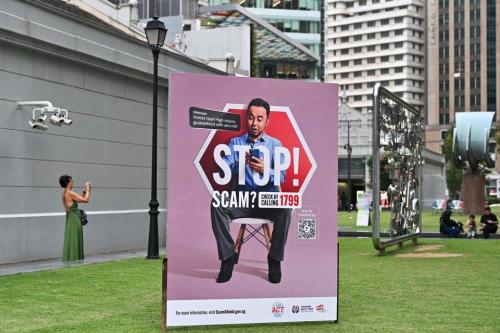
Impersonation scams have surged sharply. Police recorded 1,762 cases in the first half of 2025, compared with 589 in the same period of 2024, with losses nearly doubling to $126.5 million. Fake Facebook accounts have even used images of Prime Minister Lawrence Wong and former defence minister Ng Eng Hen to promote fraudulent schemes.
Mr Goh stressed that scams remain a top national priority and require a “whole-of-society approach,” focusing on prevention, detection, enforcement, recovery of funds, and public education.
In response, a Meta spokeswoman said impersonation and deceptive ads violate company policy and are removed when detected. She added that Meta employs detection systems, trained review teams, and reporting tools, while continuing to strengthen safeguards.
This directive marks a significant milestone as Singapore enforces its new law, signaling a tougher stance against online scams and criminal cyber activities.
Source and Photo Credit: The Straight Times
 Image
Image 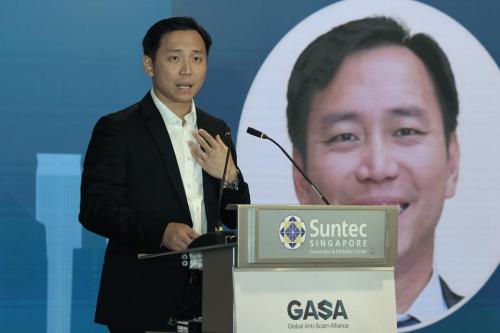




Foreign Affairs Office, The Government Public Relations Department
9 Rama VI Road, Bangkok 10400, Thailand
Tel : (+66) 2618 2323


