
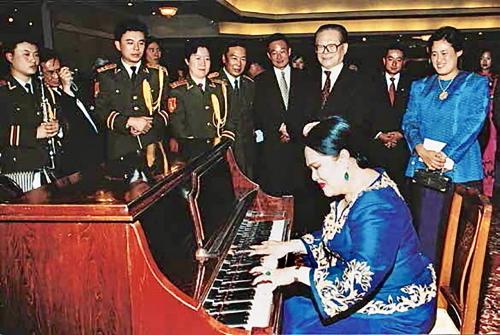
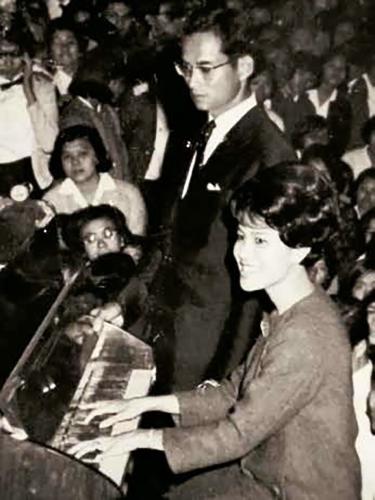
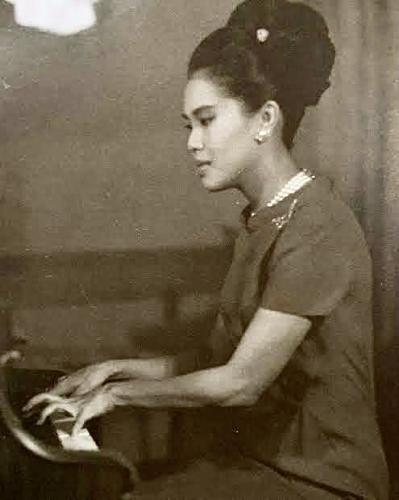
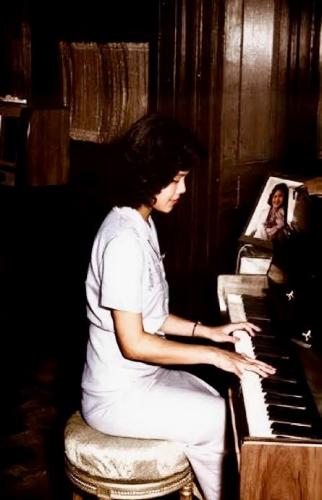
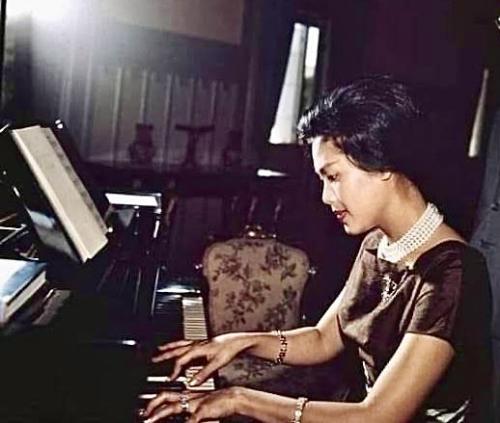
Long before becoming Queen, Her Majesty Queen Sirikit The Queen Mother – then Mom Rajawongse Sirikit Kitiyakara – began studying the piano at St. Francis Xavier Convent School in Bangkok, where she developed a lifelong passion for music.
When her father was appointed Thai Ambassador to the Court of St. James's in Great Britain, and subsequently to Denmark and France, M.R. Sirikit accompanied her family to Europe and underwent rigorous classical training. Driven by her dedication, she set her sights on entering the world-renowned Conservatoire National de Musique in Paris, dreaming of becoming a concert pianist.
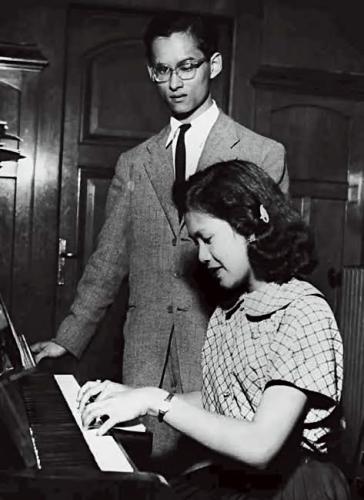
Following King Bhumibol Adulyadej’s serious car accident in Lausanne in October 1948, Her Royal Highness Princess Srinagarindra, the Princess Mother, requested that M.R. Sirikit remain in Switzerland to assist in the King's recovery while continuing her education at Pensionnat Riante Rive in Lausanne. There, she immersed herself in the study of arts, music, and languages, gravitating deeply toward the works of Romantic-era composers, such as Frédéric Chopin, Ludwig van Beethoven, Franz Liszt, and Sergei Rachmaninoff.
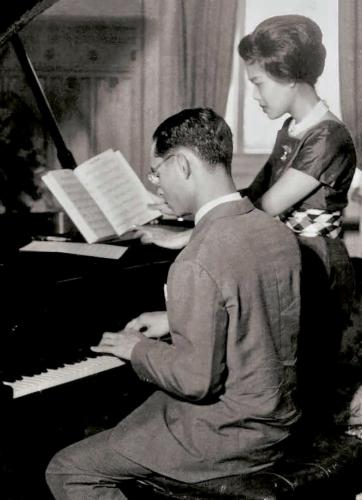
Her Majesty’s passion for music created a profound harmony with King Bhumibol Adulyadej. Serving as the King’s very first listener, she became the muse behind several of his beloved compositions, notably “Lovelight in My Heart” (“Kaeo Ta Khwan Chai”), written in 1949 to commemorate their royal engagement. Her Majesty also used music to inspire the nation. Wishing to uplift government officials, soldiers, police officers, and citizens serving the country, she commissioned Thanpuying Maniratana Bunnag to pen an encouraging poem – which King Bhumibol later set to music as the iconic anthem “Khwamfan An Sung Sut” (“The Impossible Dream”).
Beyond Western classical music, Her Majesty also held a deep appreciation for Thai traditional melodies. Her personal favorite was “Lao Duang Duean,” a beloved classical composition that she actively championed on the global stage. To elevate its presentation, Her Majesty commissioned Thanpuying Paew Snidvongseni, a National Artist, to choreograph an accompanying traditional dance – transforming the piece into a signature cultural performance for visiting royal guests and dignitaries.
Through her keen aesthetic sensibility, Her Majesty Queen Sirikit proved that true artistry knows no boundaries between East and West, or between the royal court and rural communities. Her Majesty’s refined artistic vision transformed a personal passion for music and beauty into a living national legacy.
 Image




Foreign Affairs Office, The Government Public Relations Department
9 Rama VI Road, Bangkok 10400, Thailand
Tel : (+66) 2618 2323


