To preserve Thailand’s vanishing craftsmanship, Her Majesty Queen Sirikit The Queen Mother pioneered the concept of the "Living Museum" – an ecosystem where ancient skills, living masters, and modern audiences continuously interact.
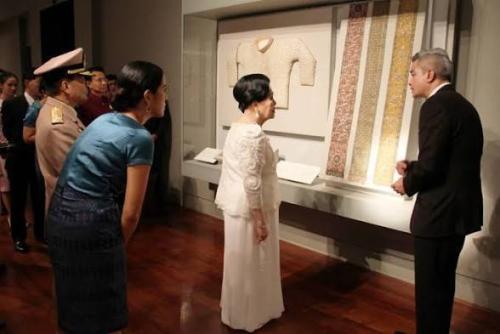
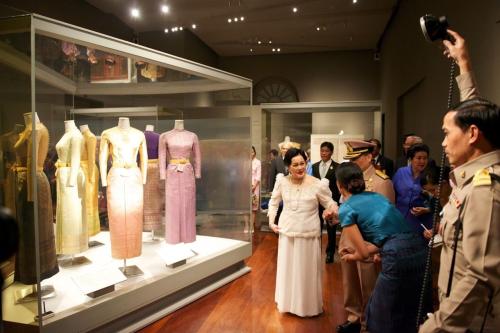
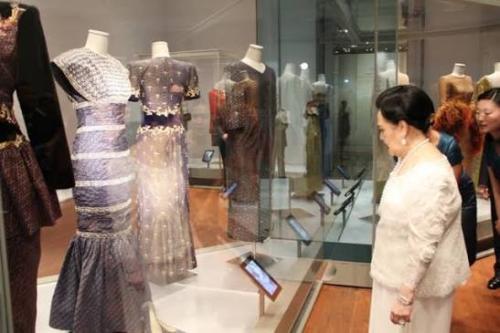
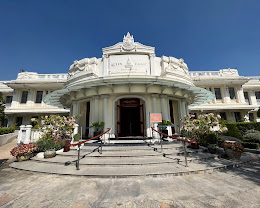
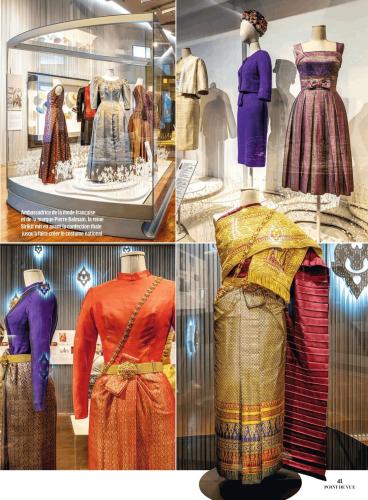
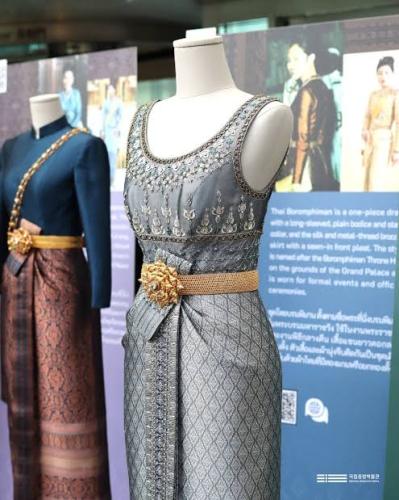
Established under Her Majesty's royal initiative to preserve and showcase Thailand's textile heritage, the Queen Sirikit Museum of Textiles opened to the public in May 2012 inside the Grand Palace compound in Bangkok. Its debut marked a turning point for heritage preservation in Southeast Asia. Rather than serving solely as a gallery for royal garments, the institution was built around a state-of-the-art textile conservation laboratory – one of the first of its kind in the region.
Developed in collaboration with international museum specialists, including experts from the Smithsonian Institution, the museum introduced rigorous global standards in climate control, lighting, and fiber restoration. Here, conservation is treated as both a science and an educational tool, ensuring that centuries-old weaving techniques are decoded, documented, and kept alive for future generations.
While the Queen Sirikit Museum of Textiles safeguards the legacy of royal and regional textiles, the Arts of the Kingdom Museum in Ayutthaya Province takes the Living Museum philosophy a step further by elevating rural artisans to the status of national masters. Through the SUPPORT Foundation, farmers and villagers were trained in intricate royal court crafts, such as nielloware and Thai silk embroidery, creating monumental masterpieces that bridge the gap between folk craft and fine art.
What truly makes Her Majesty’s museums "living" is their cyclical nature. They do not represent the end of a craft’s lifecycle, but rather its continuous renewal. The museums function as active research hubs where contemporary designers, scholars, and young weavers study historical motifs and translate them into modern contexts.
In doing so, Her Majesty created a sustainable blueprint for cultural preservation, proving that the best way to protect a nation’s heritage is not to freeze it in time, but to empower the human hands that continue to create it.
 Image




Foreign Affairs Office, The Government Public Relations Department
9 Rama VI Road, Bangkok 10400, Thailand
Tel : (+66) 2618 2323


