


Government Spokesperson Chai Wacharonke stated that the Government is pushing for the development of secondary tourist cities in Thailand as world-class “wellness travel destinations.”
Speaking on 24 January 2024 after the Cabinet retreat in Ranong province on 23 January, the Government Spokesperson cited Ranong as a secondary tourism destination with great potential for the development of wellness tourism.
Ranong is a major source of natural hot springs, especially Raksawarin, which contains important minerals useful for health treatment and rehabilitation. The objective to develop wellness tourism in Ranong is in line with the strategy of the Andaman Wellness Economic Corridor, aimed at turning the four Andaman coastal provinces of Phuket, Krabi, Phang-nga, and Ranong into a medical and wellness hub.
The development of Thailand's hot springs will help boost the “hot spring economy,” thus generating more income for local people. Efforts have also been made to upgrade hot spring destinations in the country into “spa towns,” like those in Europe, or “onsen towns,” as in Japan.
The Department of Tourism intends to link hot spring sites in various adjacent provinces to create altogether seven hot spring or wellness routes and develop them to international standards. At the same time, personnel in wellness tourism will be equipped with more knowledge and skills to provide good services to both Thai and international tourists.
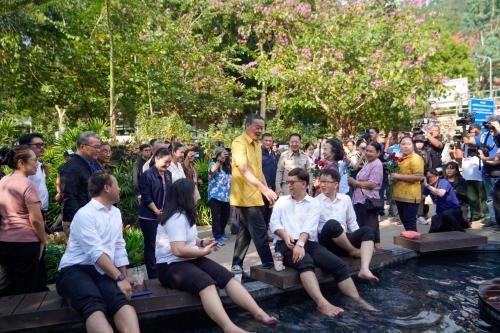
The Government Spokesperson said that, during the Cabinet retreat in Ranong, Prime Minister Srettha Thavisin also visited the Raksawarin hot spring and said that the Government was ready to facilitate the development of Ranong as a global wellness tourism hub.
Ranong has also developed emergency medical operations covering land, waterway, and air services in response to its aim toward becoming a health and wellness tourism hub in the Andaman Sea. This development will also create confidence in Thailand’s health and safety standards.
 Image
Image 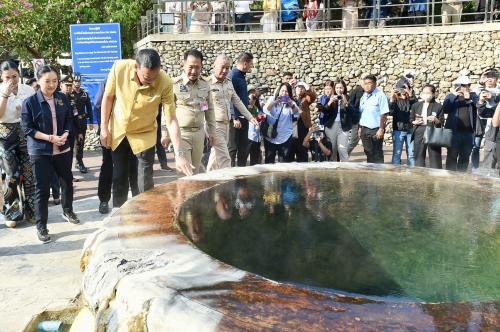




Foreign Affairs Office, The Government Public Relations Department
9 Rama VI Road, Bangkok 10400, Thailand
Tel : (+66) 2618 2323


