


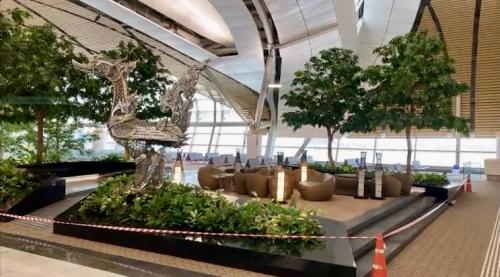
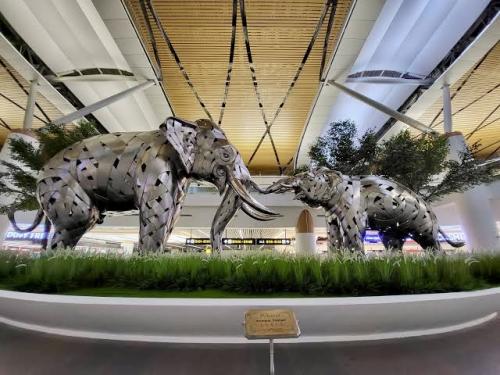
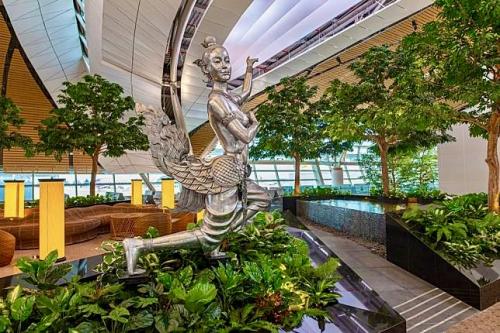
Suvarnabhumi Airport's Midfield Satellite 1 (SAT-1) in Bangkok, Thailand, has been named one of the world's most beautiful airports for 2024 by Prix Versailles, a series of architectural competitions, announced each year by UNESCO since 2015.
The other five airports are Zayed International Airport in Abu Dhabi, United Arab Emirates; Felipe Ángeles International Airport in Zumpango, Mexico; Changi Airport’s Terminal 2 in Singapore; Logan International Airport’s Terminal E in Boston, United States; and Kansas City International Airport in Kansas City, United States.
The six airports earn distinction for their aesthetic qualities and impact on the travel experience of users. The official list is in line with the principles of intelligent sustainability, taking into consideration ecological, social, and cultural impacts.
Suvarnabhumi and the other five airports are also competing for the three 2024 World Titles -- Prix Versailles, Interior, and Exterior. The winners will be announced at the UNESCO headquarters in Paris on 2 December 2024.
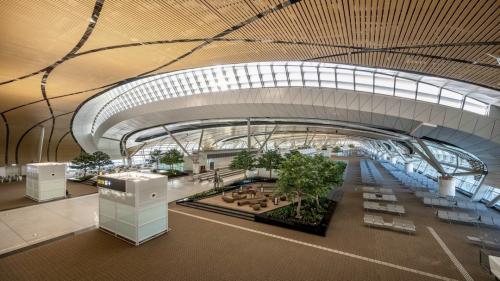
Suvarnabhumi Airport is operated by Airports of Thailand, which aims to develop this airport into one of the top 50 airports in the world by 2025. As for Its Midfield Satellite 1 terminal, it is a four-story building with two basements. The terminal covers an area of 260,000 square meters.
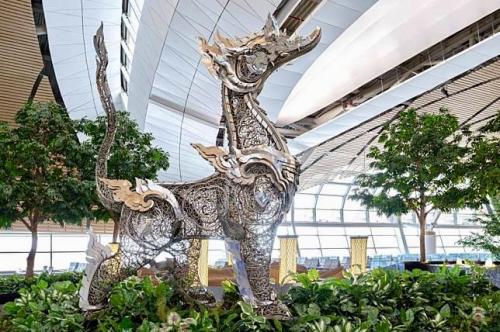
It constitutes a key part of Suvarnabhumi Airport’s phase-two development to strengthen the airport’s capabilities in order to accommodate the growing number of passengers and air traffic. It consists of contact gates connected to 28 aircraft parking bays, enhancing convenience for passengers. The terminal’s architecture reflects Thailand's cultural identity and fine creations, creating a memorable impression for visitors to Thailand.
The Ministry of Transport has set a target for Airports of Thailand to propel Suvarnabhumi Airport into the top 20 airports in the world by 2029, as Thailand aims to position itself as a global aviation hub. A target has also been set to increase the capacity of airports in Bangkok to enable them to accommodate 200 million passengers annually in the next five years.
 Image
Image 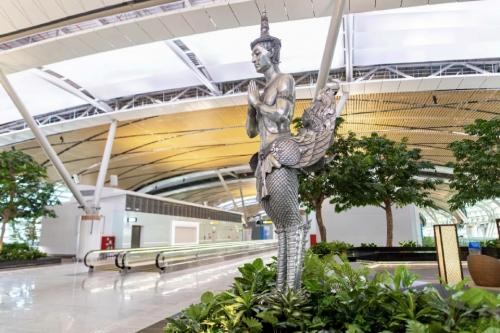




Foreign Affairs Office, The Government Public Relations Department
9 Rama VI Road, Bangkok 10400, Thailand
Tel : (+66) 2618 2323


