


Huai Mun Pineapple has been registered as a geographical indication (GI) product by the Ministry of Agriculture, Forestry, and Fisheries of Japan. It is the first Thai fruit granted GI in Japan.
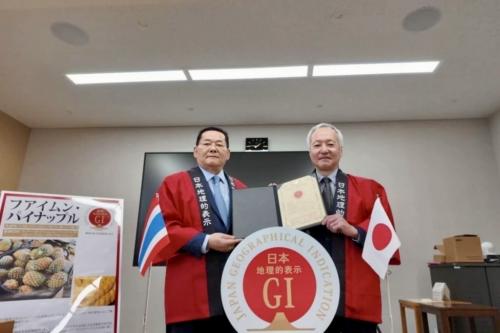
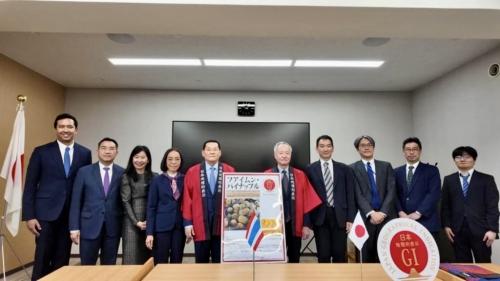
Deputy Minister of Commerce Napintorn Srisanpang recently held a discussion with Deputy Minister of Agriculture, Forestry, and Fisheries of Japan Yoichi Watanabe and received a certificate on the GI registration of Huai Mun Pineapple.
Mr. Napintorn stated that it was very gratifying that Japan had announced Huai Mun Pineapple as a GI product. This will help guarantee the quality of the Thai fruit item. Huai Mun Pineapple is the third Thai product granted GI in Japan, after Doi Chaang and Doi Tung coffee. The registration is under the 3+3 GI registration exchange program.
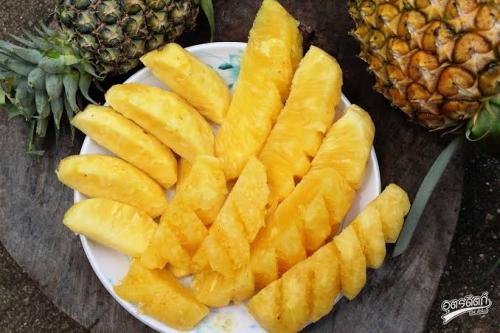
A famous agricultural product from Uttaradit Province, Huai Mun Pineapple is of the Batavia pineapple variety. Its thick, soft honey-colored flesh, sweet fragrance, and high nutritional value are prominent features of this pineapple. These features make it popular and in great demand among Japanese consumers.
Huai Mun Pineapple also has great export potential. There are more than 850 Thai producers for this product, with an annual production capacity exceeding 180,000 tons and a market value of over 1.2 billion baht.
The Department of Intellectual Property has been assigned to continue collaboration with Japan in the second phase in order to expand Thai GI products in the Japanese market and jointly develop geographical indication protection.
The geographical indication system protects a product by certifying it comes from a certain area and has characteristics that cannot be replicated elsewhere.
Currently there are 205 indigenous products with GI registration covering in all provinces. Thailand has also continued to seek the GI certification for Thai products in foreign countries.
 Image
Image 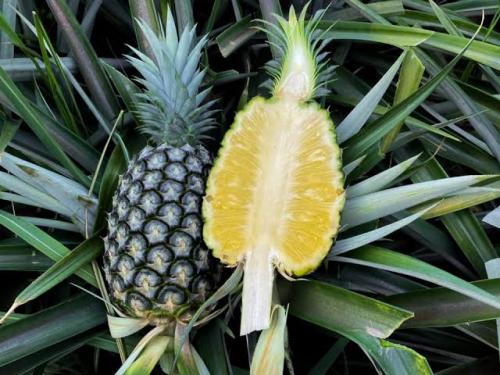




Foreign Affairs Office, The Government Public Relations Department
9 Rama VI Road, Bangkok 10400, Thailand
Tel : (+66) 2618 2323


