


Thailand has been switching from conventional rice farming practices to an alternate wetting and drying cultivation method, aimed at promoting low-carbon rice cultivation to minimize greenhouse gas emissions.
Minister of Agriculture and Cooperatives Narumon Pinyosinwat said that, today, more than 4.9 million families in Thailand are engaged in rice cultivation covering over 70 million rai (about 28 million acres) of farmland. Rice farming covers almost half of farmland in the country.
Statistics show that, in 2019, agriculture was the country's second largest greenhouse gas emitting sector after the energy sector. The Rice Department, under the Ministry of Agriculture and Cooperatives, has introduced new techniques to promote environmental friendly rice production through the adoption of water management practices.
It has implemented the alternate wetting and drying cultivation method on a trial basis in 22 provinces, with the participation of about 3,300 farmers.
Minister Narumon said that the method had proved effective and convenient, as well as saving costs. It can also reduce methane emissions that cause greenhouse effect in the rice production process by 30 percent. This marks a significant shift toward low-emission rice production in Thailand, which will help mitigate climate change and PM 2.5 air pollution. Moreover, it will also promote Thailand’s premium rice markets and increase farmers’ income.
Thailand has also been successful in developing microorganisms to clear rice straw and stubble, rather than burning them. This development will lead to the reduction of methane emissions, as well.
Currently, Thailand is able to produce 10 million rai (about four million acres) of low-carbon rice in the Chao Phraya River basin through the use of the alternate wetting and drying cultivation method and microorganisms.
 Image
Image 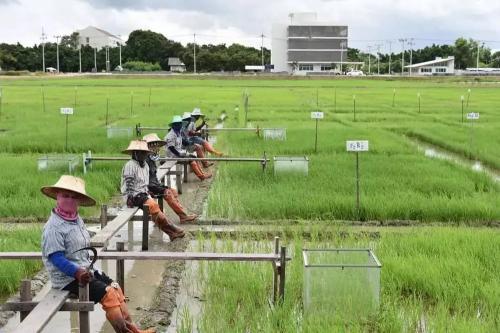





Foreign Affairs Office, The Government Public Relations Department
9 Rama VI Road, Bangkok 10400, Thailand
Tel : (+66) 2618 2323


