


Three Thai documentary heritage items have been inscribed on the United Nations Educational, Scientific and Cultural Organization (UNESCO)’s Memory of the World Register for 2025.
Speaking on 26 April, Deputy Government Spokesperson Sasikarn Wattanachan quoted a report from the Fine Arts Department describing the three Thai documentary heritage items as follows:
1. The Manuscript of Nanthopananthasut Kamlaung
This 18th-century, 190-page khoi-paper manuscript contains a translated and embellished work of Buddhist literature depicting the Buddha taming Nanthopanantha-naga. It showcases a complex literary form and style, timeless moral values, and a sophisticated multilingual manuscript tradition. It reflects Ayutthaya’s centuries-long cultural interchanges in Buddhism, translation, multilingual literacy, and manuscript culture.
Transcribed and published to promote wider readership and accessibility and to ensure its proper preservation, the manuscript has inspired studies in paleography, literature, history, contemporary arts, and international Buddhist relations. Available online, it enjoys spiritual support from Buddhist communities worldwide. Its epigraph, which has been sung by international Buddhist communities and musicians during recent global calamities, conveys universal messages of auspiciousness, tolerance, and peace.
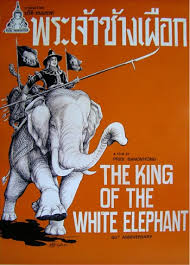
2. The King of the White Elephant and the archival documents
The King of White Elephant is a Thai feature film produced in 1940, adapted from an English-language novel with the same title into a 35 mm black-and-white film with sound. It is the first Thai film presented in English, reflecting the filmmaker's intent for international distribution. Emerging at the onset of the World War II, the film stands as a testament to peace and diplomacy, promoting a message of harmony. From an archival standpoint, it is the only surviving Thai film from the pre-World War II era, providing invaluable insights into the entertainment of the time. The film skillfully combines traditional Thai performances with Western cinematic language.
3. The Birth of the Association of Southeast Asia Nations (ASEAN) (Archives about the Formation ASEAN, 1967-1976)
Jointly submitted by Indonesia, Malaysia, Singapore and Thailand, the archives record the establishment of ASEAN by its five founding countries: Indonesia, Malaysia, the Philippines, Singapore, and Thailand. This collection includes the 1967 ASEAN Declaration and related records, comprising 16 textual files, one photo, one film, three audio files, and 12 oral history interview recordings. The archives describe ASEAN’s foundational mission to turn neighbors into cordial friends and build mutual trust where there were once trust deficits. Furthermore, the archives provide evidence that newly independent, relatively small countries have their own agency in shaping international politics toward a more peaceful and stable landscape. The archives serve as a basic reference for ASEAN’s diplomacy, which later became known as the “ASEAN Way.”
Previously, many Thai documentary heritage items, such as Epigraphic Archives of Wat Pho, the King Ram Khamhaeng Inscription, and the National Collection of Palm-Leaf Manuscripts of Phra That Phanom Chronicle, were added to UNESCO’s Memory of the World Register.
Established in 1992, the Memory of the World Program aims to promote the preservation of – and universal access to – the documentary heritage of humanity. Often extremely fragile, this heritage is exposed to risks of deterioration and disasters; hence the need for such a valuable program.
 Image
Image 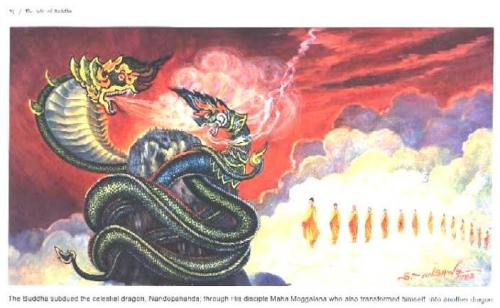




Foreign Affairs Office, The Government Public Relations Department
9 Rama VI Road, Bangkok 10400, Thailand
Tel : (+66) 2618 2323


