


Deputy Prime Minister and Minister of Finance Ekniti Nitithanprapas stated that impacts on Thailand from the escalating tensions in the Middle East are manageable, and that the Government is accelerating measures to minimize the negative effects.
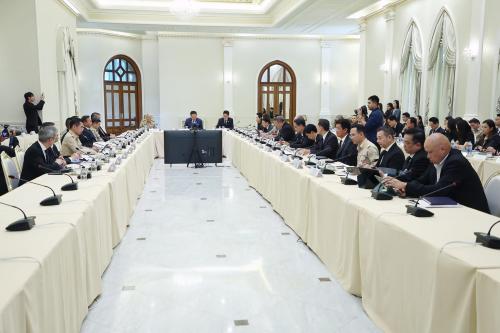
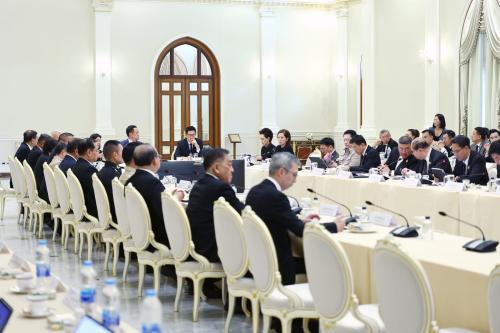
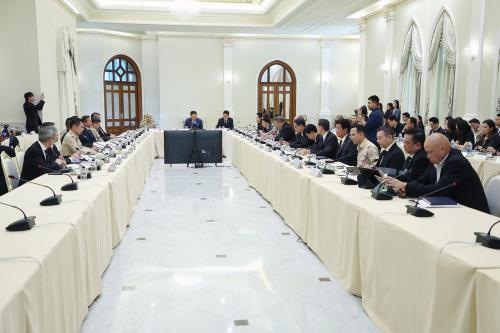
Mr. Ekniti on 2 March 2026 was assigned by the Prime Minister to chair a meeting of representatives from the public and private sectors to discuss Thailand’s problems arising from the Middle East conflict and efforts to ease impacts that might occur, as well as opportunities for Thailand.
He talked about three major areas, namely (1) all dimensions of impacts, (2) short-term measures to cope with the situation, and (3) long-term strategies to ease impacts, with an emphasis on energy, trade in goods and services, tourism, financial and capital markets, and labor.
He said that the situation in the Middle East might lead to higher oil prices in the short term. The Ministry of Energy has prepared mechanisms to cushion the impacts and ensure sufficient oil reserves to meet domestic demand. As Thailand’s oil reserves are sufficient for 60 days, the Government is confident that it will have enough time to seek additional oil sources.
Concerning trade in goods and services, the Middle East situation is not likely to have much impact, as Thai exports to the region account for less than 4 percent of Thailand’s total exports. Thailand mainly imports oil from the Middle East, and indirect impacts on transport may increase. The Ministry of Commerce was assigned to work with the private sector to deal with this problem.
Regarding tourism, direct impacts are limited, as tourist arrivals from the Middle East represent about 4 percent of Thailand’s international tourist arrivals. In the long term, Thailand may have greater opportunities, if the aviation hub in the Middle East is affected and relocated to Southeast Asia, especially Thailand.
Concerning financial and capital markets, they still enjoy stability despite slight impacts. The Bank of Thailand reported that Thailand’s international reserves now stand at almost 300 billion US dollars. The country’s financial system is robust enough to cope with the risks posed by external volatility.
As for labor, Mr. Ekniti said that the Prime Minister attached great importance to taking care of Thai workers in the Middle East. The Ministry of Foreign Affairs and the Ministry of Labor were instructed to ensure their safety. The Ministry of Labor has also set up a situation monitoring center to assist Thai workers in the region.
 Image
Image 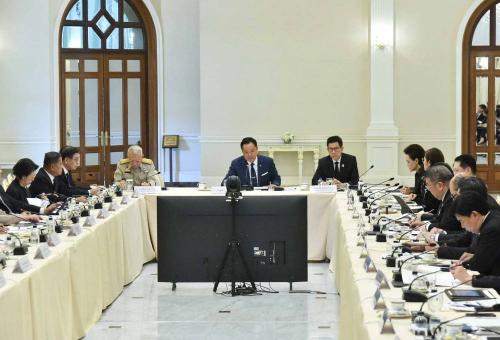




Foreign Affairs Office, The Government Public Relations Department
9 Rama VI Road, Bangkok 10400, Thailand
Tel : (+66) 2618 2323


