


Prime Minister and Minister of Interior Anutin Charnvirakul has emphasized the implementation of measures for energy resilience in response to conflicts in the Middle East to ensure that people would be least affected by the situation.
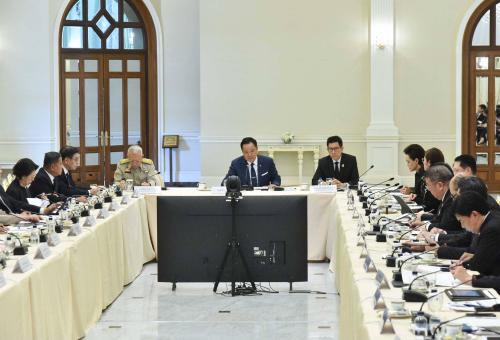
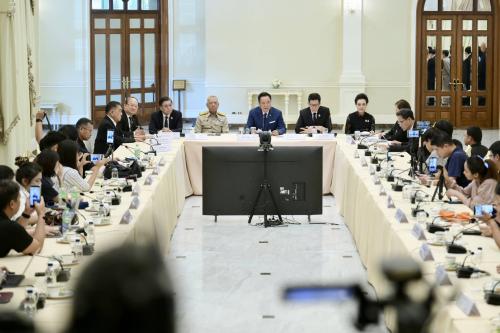
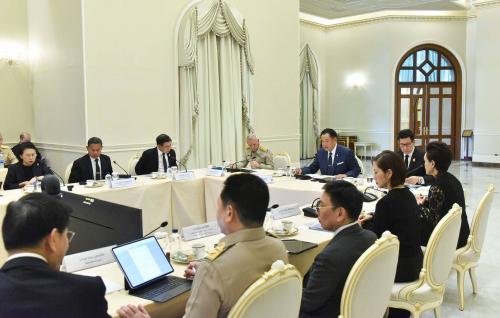
The Prime Minister on 9 March 2026 called an urgent meeting of relevant agencies to set measures to cope with impacts on Thailand from the Middle East tensions. He said that the Government was ready to adopt necessary measures to strengthen energy security, including the diversification of oil and natural gas imports and energy saving.
At the Joint Management and Monitoring Center for the Situation in the Middle East, Deputy Prime Minister and Minister of Transport Phiphat Ratchakitprakarn stated that Thailand's oil reserves have increased to a 95-day supply now.
He urged people not to panic over the news on oil shortages, as the domestic oil supply is currently sufficient to meet the demand. Diesel prices will remain capped at 29.94 baht per liter for the remainder of the 15-day stabilization period announced on 28 February, while gasoline prices continue to be supported by the Oil Fund. Any future adjustments, if necessary, would be implemented gradually in line with market mechanisms.
Minister of Energy Auttapol Rerkpiboon said that the Ministry of Energy is increasing mandatory oil reserves for traders from 1 percent to 3 percent by 30 April 2026. It will also increase biodiesel blending from B5 to B7 and promote wider use of ethanol-based fuels, such as E20 and E85, to reduce reliance on crude oil imports.
Concerning natural gas, the Government is increasing the production of natural gas from the Gulf of Thailand and electricity imports from Laos to ensure stable power generation. The minister reaffirmed that Thailand has sufficient fuel supplies.
In addition, he said, the Government will extend the freeze on liquefied petroleum gas (LPG) prices for a further two months, from April until May, to ease living costs. The public has also been urged to help save energy by setting air-conditioning temperatures at 26-27 degrees Celsius. Work from home should also be promoted to reduce travel and boost energy resilience.
 Image
Image 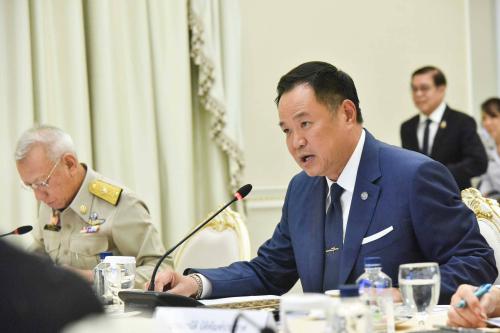




Foreign Affairs Office, The Government Public Relations Department
9 Rama VI Road, Bangkok 10400, Thailand
Tel : (+66) 2618 2323


