


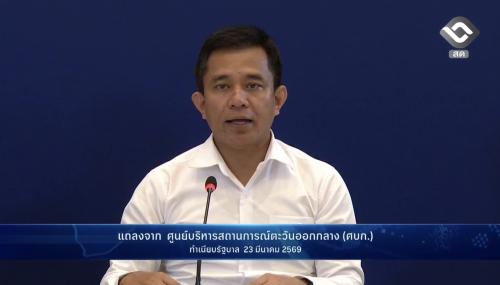
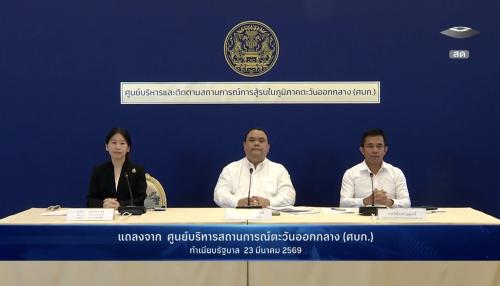
The Joint Management and Monitoring Center for the Situation in the Middle East held a press briefing on 23 March 2026 at 11:05 hr on the progress of managing the impacts of the conflict in the Middle East.
At the press briefing, Mr. Watcharin Boonrit, Deputy Executive Director of the Office of Energy Policy and Planning, Ministry of Energy, stated that, as of 20 March 2026, Dubai crude oil was priced at USD 158 per barrel, an increase of 122%, compared to the period before the situation, which represents a significant adjustment for the global energy system.
Nevertheless, he said, the Government has employed the Oil Fuel Fund mechanism to stabilize domestic prices, keeping retail prices at a manageable level. Currently, diesel is THB 31.40 per liter, and Gasohol E10 is around THB 33.05 per liter, which does not fully reflect global costs. Compared with neighboring countries, Thailand’s oil prices remain significantly lower. For example, diesel prices in Malaysia are around THB 38–39 per liter, while the Philippines and Vietnam have raised prices at higher rates, in some cases by 50–70%.
In addition, the Ministry of Energy is advancing structural measures such as adjusting the biodiesel ratio from B5 to B7 and setting the price differential of Gasohol E20 to be about THB 5 per liter lower than E10 to encourage the public to use alternative energy, reduce dependence on imported oil, and help maintain long-term energy stability.
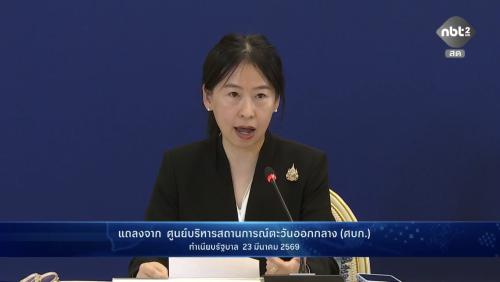
Concerning product prices rise in line with energy costs, Ms. Kanittha Kangsavanich, Inspector General of the Ministry of Commerce and Deputy Spokesperson of the Ministry of Commerce, stated that there are currently 59 controlled items, divided into categories requiring approval before price adjustments, such as processed foods, milk, fertilizers, and animal feed, and categories requiring notification before adjustment, such as general consumer goods.
During the current situation, the Minister of Commerce has instructed a review of additional controlled items to align with changing costs and to increase scrutiny in approving price adjustments. Collaboration with provincial governors, provincial energy officers, and provincial committees on goods and services pricing is conducted continuously to inspect businesses on-site.
The ministry’s operations focus on three main aspects: ensuring prices match actual costs, preventing refusal of sales, and monitoring stock levels to meet public demand, preventing shortages or opportunistic overpricing.
Ms. Kanittha added that the Ministry of Commerce has proactively implemented measures to ease citizens’ living costs, expanding outlets for affordable “Blue Flag” products nationwide at provincial, district, and community levels, allowing citizens access to essential goods at reasonable prices. Assistance is also provided to farmers through reduced-price “Green Flag” fertilizers and agricultural inputs during planting seasons.
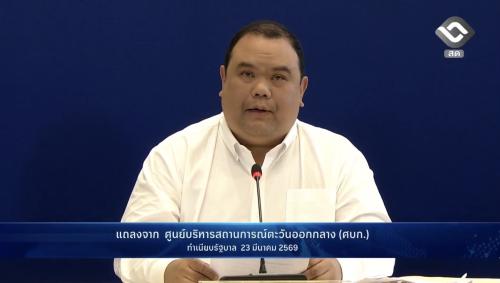
Mr. Panidol Pachimsawat, Deputy Director-General of the Department of Information and Deputy Spokesperson of the Ministry of Foreign Affairs stated that the situation in the Middle East remains severe, with attacks expanding to energy infrastructure in several countries, affecting global economic and energy market stability.
The Thai government continues to assist Thai citizens in the region. In the case of a Thai worker who died in Israel, authorities are coordinating with Israeli officials to repatriate the body promptly. Meanwhile, 14 Thai workers from Bandar Abbas, Iran, were evacuated by sea to Turkey on 23 March 2026 for onward travel back to Thailand. Since the onset of the situation, a total of 1,479 Thai citizens have been assisted out of high-risk areas.
 Image
Image 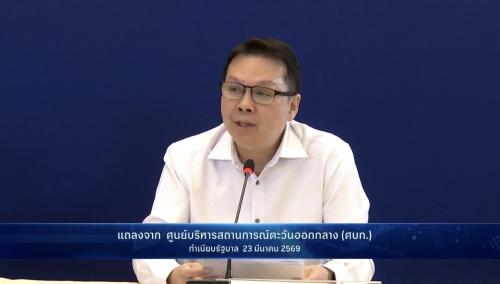




Foreign Affairs Office, The Government Public Relations Department
9 Rama VI Road, Bangkok 10400, Thailand
Tel : (+66) 2618 2323


