


Minister of Foreign Affairs Sihasak Phuangketkeow stressed the need for Thailand to adopt a clear, balanced, and forward-looking approach in navigating global challenges in the current geopolitically fragmented world.
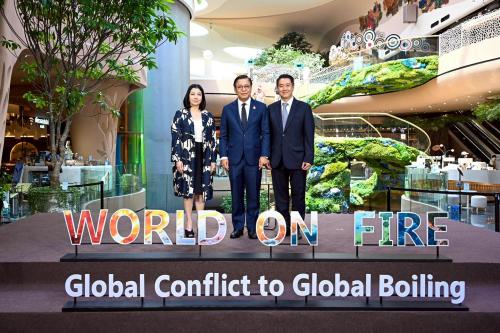
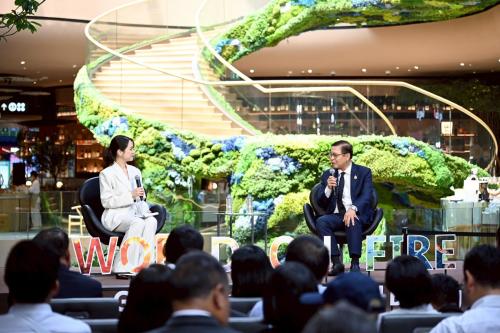
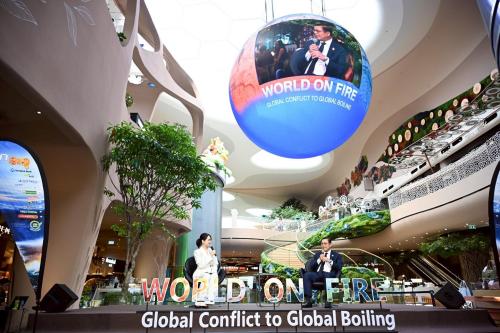
The Foreign Minister on 23 March 2026 shared his perspectives on the topic “World on Fire: Dual Crises of Climate Extremes and Geopolitical Fragmentation – Where Does Thailand Stand?”at a Channel 3 special forum entitled “WORLD ON FIRE: Global Conflict to Global Boiling,”held at the Siam Paragon in Bangkok.
At the forum, he outlined the current global geopolitical landscape, which is undergoing significant transformation and increasing fragmentation, driven by intensifying competition among major powers, challenges to multilateralism and the rules-based international order, and emerging transnational threats, including transnational crime, cyber threats, and climate change.
These developments, he said, have contributed to heightened uncertainty in international relations. Thailand also needs to promote ASEAN’s role in conflict resolution in a peaceful manner that upholds the rules-based international order.
The Foreign Minister placed an emphasis on pursuing principled and well-defined diplomacy, advancing the transition to clean energy, promoting the Sustainable Development Goals (SDGs), and supporting inclusive economic growth, as well as addressing key challenges, such as the situation in the Middle East and the Thailand-Cambodia border situation.
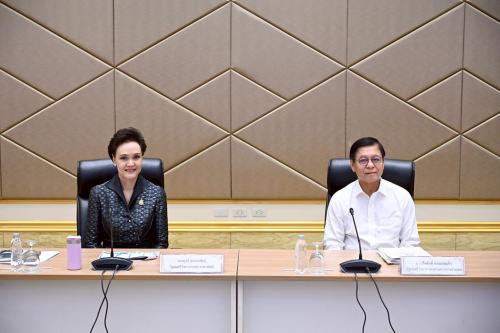
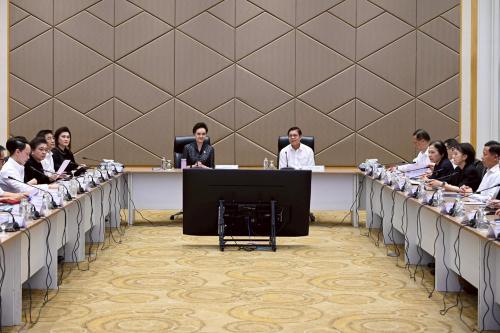
Previously, on 20 March at the Ministry of Commerce, the Foreign Minister co-chaired a meeting with Mrs. Suphajee Suthumpun, Minister of Commerce, on the integration of foreign and trade policy. Also, in attendance were senior executives from the Ministry of Foreign Affairs and the Ministry of Commerce.
Both sides exchanged views on approaches to integrating foreign affairs and trade, with key priorities, as follows:
1. Managing geopolitics and geo-economics amidst challenges to the rules-based international order, particularly the situation in the Middle East, including shaping Thailand’s positions toward major powers, addressing trade imbalances, and ensuring access to strategic imports such as oil and chemical fertilizers;
2. Advancing proactive strategies to expand into new and emerging markets, with a focus on diversifying trade risks, while leveraging “Science Diplomacy” to enhance Thailand’s competitiveness and ensure close coordination of high-level visits between the two sides;
3. Strengthening economic partnerships through expediting negotiations of free trade agreements (FTAs) and advancing Thailand’s accession to the OECD; and
4. Integrating inter-agency mechanisms to strengthen Team Thailand, including efforts to address the impacts of emerging trade measures, such as the European Union’s Carbon Border Adjustment Mechanism and the Packaging and Packaging Waste Regulation.
The discussion aimed to strengthen policy-level integration between the Ministry of Foreign Affairs and the Ministry of Commerce, with a view to ensuring that foreign and trade policies are aligned and pursued in a coherent direction.
 Image
Image 






Foreign Affairs Office, The Government Public Relations Department
9 Rama VI Road, Bangkok 10400, Thailand
Tel : (+66) 2618 2323


