


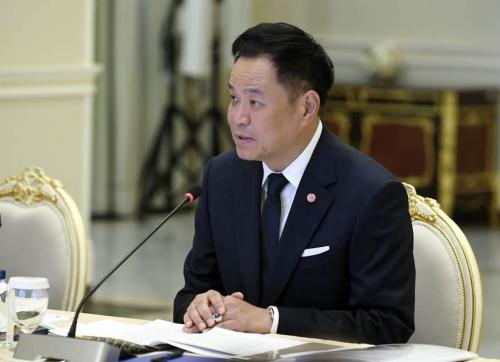
Prime Minister and Minister of Interior Anutin Charnvirakul stated that Thailand's goal is not merely to address short-term issues or attract data center investments just to serve as a location for data centers, but to ensure that these investments create true added value for the country.
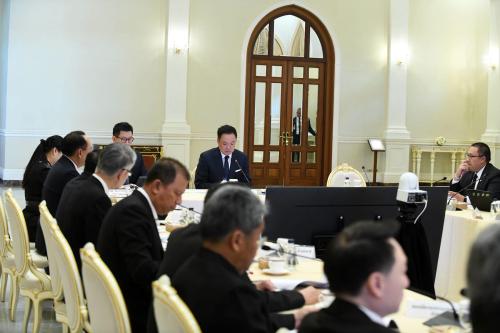
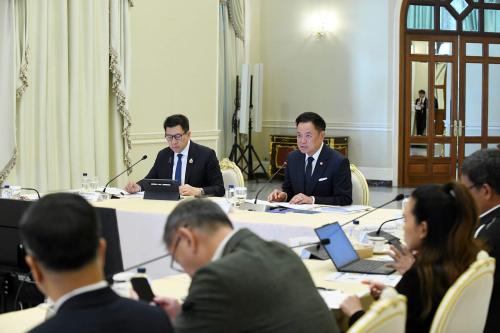
The Prime Minister presided over the opening of the Data Center Business Policy Committee meeting at Government House on 4 September 2026, when committee members jointly set directions and a policy framework for Thailand’s data center business, aligning with economic and technological changes. A data center is vital infrastructure for storing and processing future-industry data, serving as the foundation of the digital economy.
He said that Thailand must attract related industries, promote technology transfer, develop Thai human resources, build a digital ecosystem, and enhance the country's long-term competitiveness. The Prime Minister also urged the public sector to establish appropriate regulations to build investor confidence and minimize potential negative impacts.
He told the committee to emphasize setting Green Data Center standards, promoting the use of renewable energy, ensuring cybersecurity and data protection, and supporting Thailand's artificial intelligence (AI) and cloud ecosystems.
After the meeting, Deputy Prime Minister and Minister of Finance Ekniti Nitithanprapas, as Chairman of the Data Center Business Policy Committee, said that the meeting considered four major issues and decided to (1) accelerate the processing and integration of data center data into a unified dataset as soon as possible, (2) speed up organizing and setting shared rules to oversee data centers, (3) design the type of data center that the country needs, and (4) establish evaluation criteria across various dimensions to select data centers that maximize socioeconomic benefits for the country.
He said that the primary policy given by the Prime Minister was that Thailand was not obstructing data center investments, but would adjust its approach from agency-by-agency approval to establishing a national-level strategy and framework. This will ensure that investments align with the country's development direction and can efficiently manage any impacts.
 Image
Image 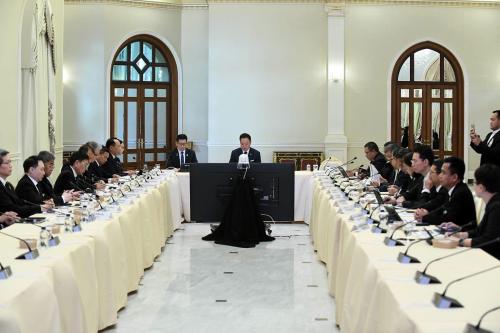




Foreign Affairs Office, The Government Public Relations Department
9 Rama VI Road, Bangkok 10400, Thailand
Tel : (+66) 2618 2323


