


The Cabinet, during its meeting on 8 September 2026, approved in principle five major bills on legal reform efforts, according to Government Spokesperson Ekkapob Pianpises.
The five pieces of legislation, proposed by Deputy Prime Minister Pakorn Nilprapunt, include the following
1. Draft Bill on Liability for Misconduct in Recruitment Examinations for State Agency Personnel
It seeks to prevent and tackle corruption in recruitment examinations for positions in state agencies, while also setting up designated mechanisms and agencies with specific investigative powers.
2. Draft Emergency Decree Amending the Firearms, Ammunition, Explosives, Fireworks, and Imitation Firearms Act, B.E. 2490 (1947)
It seeks to tighten the possession and use of firearms. License applicants will be required to undergo training, competency testing, and mental health evaluations. The validity period of licenses will be shortened, lifetime licenses will be revoked, and penalties for offenders will be increased. An amnesty provision allows individuals to surrender unauthorized firearms, ammunition, or explosives to the registrar within 90 days without facing penalties.
3. Draft Bill on Energy Industry
The bill stipulates that money from the Power Development Fund shall be used to cover the costs of public electricity for street and public lighting. It also clarifies the duties and qualifications related to the Energy Regulatory Commission (ERC), and mandates that the National Energy Policy Council shall temporarily perform the duties of the ERC if the number of active ERC commissioners falls below four.
4. Draft Bill on Public Procurement and Supplies Administration
It seeks to revise the criteria for selecting contractors to prioritize the government's best interests, utilization objectives, and contract performance capabilities over price proposals. Moreover, grounds for contract termination and blacklisting will be added for cases of severe negligence or errors in work performance. The authority of heads of government agencies to issue blacklisting orders will be expanded, and an appeal bond requirement will be established.
5. Draft Bill on Community Forest
The bill stipulates that the revenue from the sale of carbon credits of a community forest will be exempt from being remitted to the state treasury as national revenue. It will be allocated to the community forest members who participate in activities in accordance with specified criteria, allowing the community to directly benefit from the carbon credits.
 Image
Image 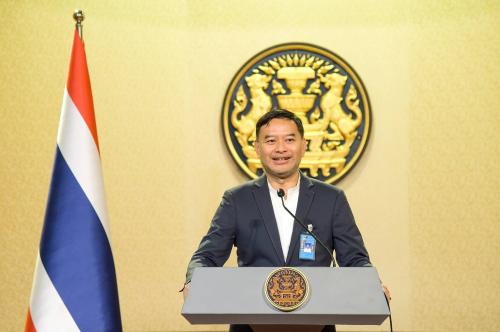




Foreign Affairs Office, The Government Public Relations Department
9 Rama VI Road, Bangkok 10400, Thailand
Tel : (+66) 2618 2323


