


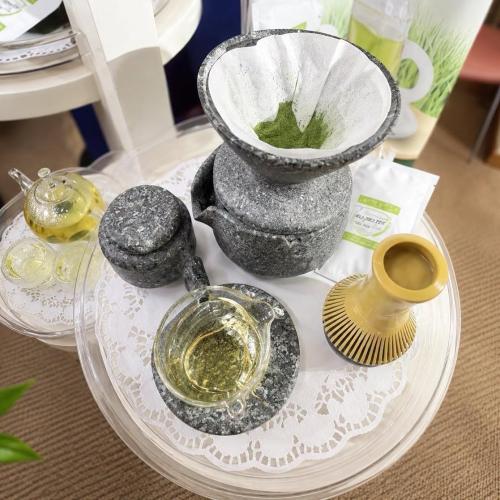
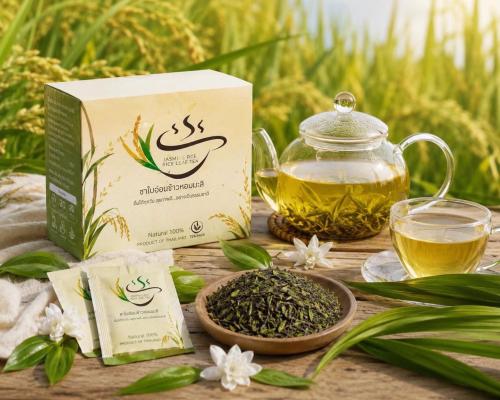
Young Hom Mali Rice (Jasmine Rice) leaves from Tung Kula Ronghai in Roi Et Province have been developed into tea, an alternative health drink, and processed into various natural food items.
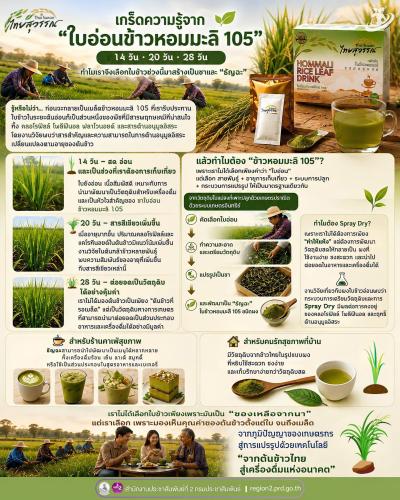
Deputy Government Spokesperson Patdarasm Thongsaluaykorn stated that the Agricultural Research Development Agency (Public Organization) has collaborated with Mahidol University to launch a project transferring the technology of cultivating and producing rice leaf tea from Hom Mali Rice 105.
This project aims to promote career development in Roi Et and add value to Thai rice, catering to the health-conscious rice and beverage market. Having gained widespread interest online, the project highlights the potential of Thai agricultural products to be transformed into innovative goods.
Both the Agricultural Research Development Agency and Mahidol University are focused on leveraging research for commercial use to create economic opportunities for farmers. The initiative spans from cultivation knowledge and quality control to advanced processing.
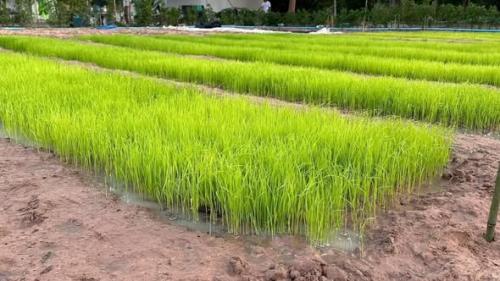
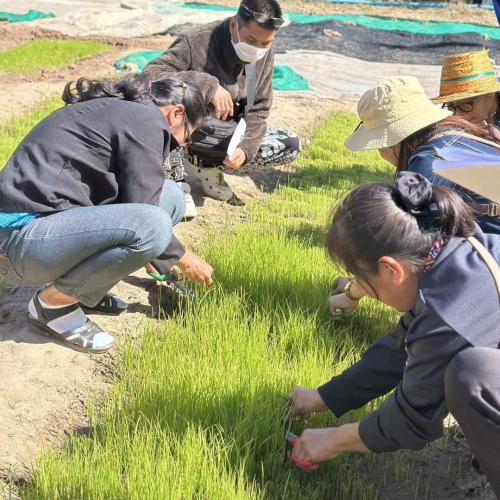
The highlight of this research is recognizing the value of the rice plant from its young leaves, rather than waiting to harvest only the grains. The developed technology requires a cultivation period of about 28 days and allows up to three young leaf harvests per production cycle under proper management. This increases opportunities for farmers to shorten their production cycles for sales, generating supplementary income alongside traditional rice farming.
More than 350 farmers across five districts in Roi Et – namely Kaset Wisai, Suwannaphum, Pathum Rat, Phon Sai, and Nong Hi – have participated in this pilot project. The initiative transfers comprehensive knowledge, ranging from plantation management and young leaf quality control to processing and market development.
Statistics show that yield per rai (one rai is equal to 1,600 square meters) has increased by over 80 percent, while commercial expansion generates an additional 1,500–2,000 baht per rai for farmers. However, actual outcomes may vary depending on production models and market demand.
In addition to being produced as tea leaves, young Hom Mali Rice 105 leaves can also be processed into powder for use in a wide variety of drinks and foods, such as lattes, smoothies, and bakery items. This opens up opportunities for coffee shop owners, food businesses, and processing industries to use Thai rice raw materials to create new products, increasing consumer choices and creating marketing opportunities for farmers.
 Image




Foreign Affairs Office, The Government Public Relations Department
9 Rama VI Road, Bangkok 10400, Thailand
Tel : (+66) 2618 2323


