


The Thai Government is elevating Udon Thani Province’s Ban Non Kok textiles dyed with extracts of the red lotus on the international fashion stage, driving cultural tourism and a sustainable local economy.
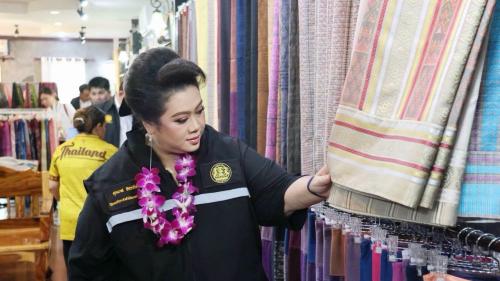
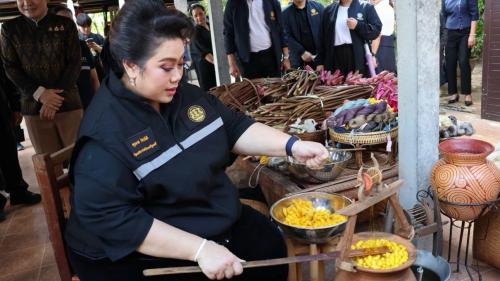
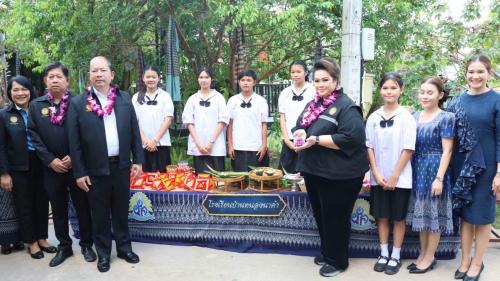
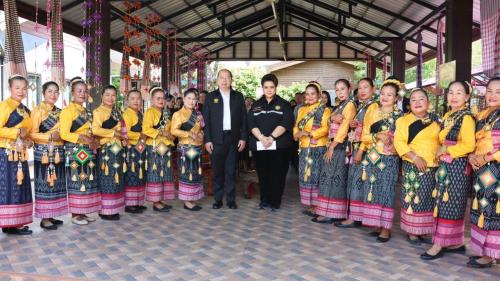
Minister Attached to the Prime Minister’s Office Supamas Isarabhakdi on 2 November 2026 visited the Ban Non Kok Ancient Fabric Weaving Group Learning Center in Nong Na Kham Subdistrict, Mueang Udon Thani District, to observe the weaving of red-lotus-dyed textiles.
Minister Supamas stated that Ban Non Kok community is a prime example of applying ancient weaving wisdom combined with natural dyes from lotus stems and red lotus petals, creating unique textiles that align with the Bio-Circular-Green (BCG) economy model and hold high potential for expansion into the domestic and international sustainable fashion markets.
The highlight of Ban Non Kok is the preservation of traditionally patterned khit silk weaving and traditional wooden-loom weaving, alongside the development of natural dyes and contemporary patterns. There are currently over 300 local weaver network members, generating an annual circulating community revenue of 10 to 15 million baht from the sale of woven fabrics and processed products. This reflects how local wisdom can be developed into a profession and generate income for community members, including the elderly, women, and youth.
Minister Supamas urged the Government Public Relations Department (PRD) and MCOT Public Company Limited to promote the story of cloth weaving in Ban Non Kok – covering the origin of its red lotus dye, the delicate weaving process, and the integration of local textiles into contemporary fashion. This initiative aims to raise consumer awareness of product value, open up new market opportunities for producers, and further elevate the international profile of Thai woven fabrics.
The Government will also promote the learning center as a creative tourism landmark, connecting the wisdom of weaving with natural dye innovation. This will give Thai and international tourists and study visit groups the opportunity to learn dyeing, observe weaving, and purchase community products directly, thereby distributing income to weavers as well as businesses dealing in food, accommodation, and local products.
In addition, promoting product standards will be emphasized together with clear labeling – including the product type, manufacturer name, and manufacturer location – so that buyers receive accurate information, can trace the origin, and make confident purchases. This will build credibility for community woven fabrics and support long-term market expansion.
 Image







Foreign Affairs Office, The Government Public Relations Department
9 Rama VI Road, Bangkok 10400, Thailand
Tel : (+66) 2618 2323


