

Thailand has joined other Lancang-Mekong countries in intensifying joint operations against transnational telecom and online fraud and adopting urgent measures to fight scammers.
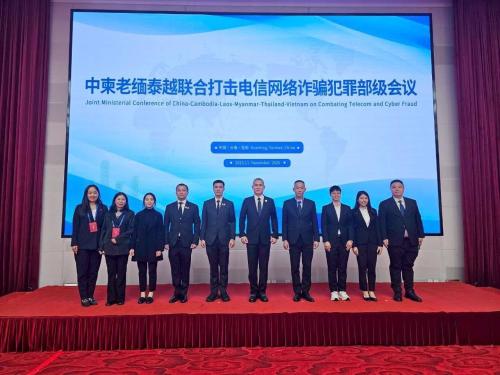
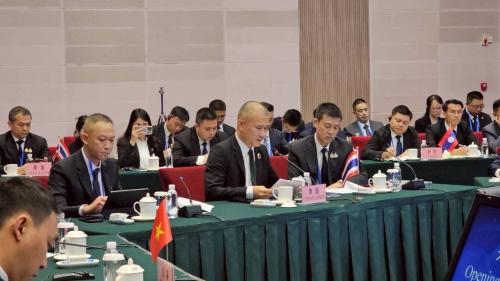
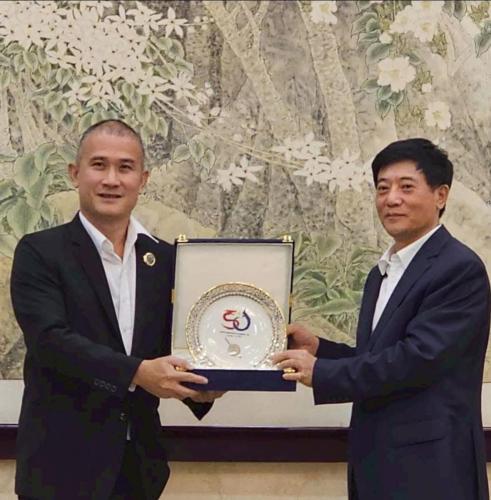
Representatives from six Lancang-Mekong countries, comprising China, Cambodia, Laos, Myanmar, Thailand, and Vietnam. attended a ministerial-level meeting on joint action against telecom and online fraud, held on 14 November 2025 in Kunming, Yunnan Province of China. The Thai delegation was led by Pol. Lt. Gen. Jirapop Phuridej, Assistant Commissioner-General of the Royal Thai Police and head of the Anti-Cyber Scam Center (ACSC).
In his statement at the meeting, Pol. Lt. Gen. Jirapop said that scam centers in the Mekong region are not only a form of technological crime but also transnational crime networks that harm citizens in all countries involved. Thailand, which has been directly affected, would take serious and quick action. He called on all countries to step up their concerted efforts to eradicate such crime to protect the interests of people across the region.
According to Pol. Lt. Gen. Jirapop, the ACSC found that financial flows from mule accounts were largely transferred abroad, while IP footprints often originated outside Thailand, especially in border areas and special economic zones in some countries in the region. This information had already been sent to all relevant countries.
He proposed three measures for joint implementation against online scam networks. The first measure seeks to establish a real-time data-exchange system and create a shared central database of mule accounts, phone numbers, and IP addresses linked to criminal activity, so that automated alerts would allow all countries to block, freeze, and investigate simultaneously.
In the second measure, all participating countries were urged to appoint cyber liaison officers and deploy law-enforcement personnel to key operational hubs abroad. These personnel would act as a direct line for immediate cooperation, enabling information requests and joint actions to be completed within the same day.
The third measure seeks to implement joint telecommunications control measures, including stricter SIM-card registration through identity-verification systems, such as facial recognition. It also involves limits on SIM ownership per individual and the consideration of temporarily cutting the signal in suspicious areas.
The meeting "Joint Ministerial Conference of China-Cambodia-Laos-Myanmar-Thailand-Vietnam on Combating Telecom and Cyber Fraud" agreed on a comprehensive 21-point initiative to combat telecom and online fraud.
For instance, all parties emphasized their joint operations to eliminate scam compounds, gambling zones, and fraud networks. They also agreed on coordinated actions to dismantle online gambling hubs and scam centers, joint arrests, coordinated investigations, and systematic evidence exchange. They will also create a Six-Party Ministerial Mechanism on Combating Telecom and Online Fraud.
 Image





Foreign Affairs Office, The Government Public Relations Department
9 Rama VI Road, Bangkok 10400, Thailand
Tel : (+66) 2618 2323


