


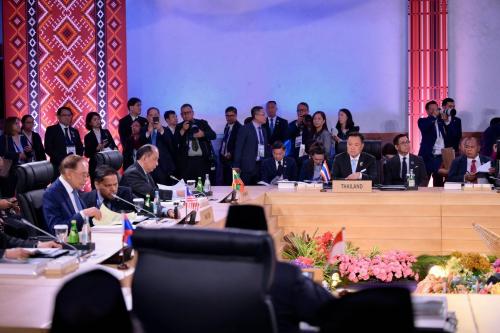
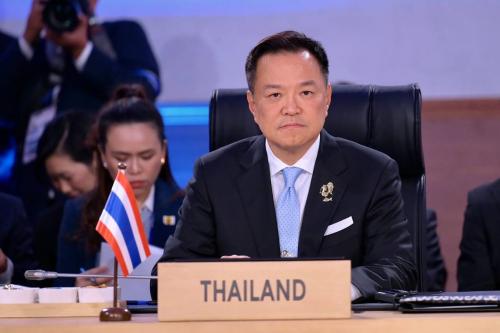
Prime Minister Anutin Charnvirakul, in an intervention at the Retreat Session of the 48th ASEAN Summit on 8 May 2026, proposed three strategic priorities for ASEAN to cope with more volatile and unpredictable world.
First, regionalism. ASEAN’s strength lies in its unity. But this is not a given. It requires Member States to look beyond national positions, align around shared regional interests, and act on them. In practice, this means improving coordination and decision-making because in times of crisis, speed and coherence matter. And as challenges become more interconnected, ASEAN regionalism must also become more integrated and holistic.
Second, resilience. This means the ability to manage external pressures and strategic competition on a sure footing. And at the heart of that is ASEAN centrality, which requires Member States to place ASEAN at a core of their respective foreign policy. At the same time, resilience is also about having the ability to manage tensions before they turn into crises. ASEAN’s ability to foster inclusive dialogue remains a key asset. However, dialogue must be supported by stronger and more practical ASEAN mechanisms, from crisis coordination to concrete cooperation that builds trust and reduces tensions before they escalate.
Third, relevance. ASEAN must continue to matter both within and beyond the region. This means positioning itself as a credible and trusted partner, engaging meaningfully on regional challenges and working with like-minded partners to support multilateralism and a rules-based order. Ultimately, relevance is about delivering on the aspirations of the people, ensuring that regional integration translates into real improvements in livelihoods and opportunities for all.
The Prime Minister pointed out that what everyone is seeing in the Middle East is not an isolated crisis, but part of a more volatile and unpredictable world. The international order as one has known will not be the same anymore.
He also touched upon the Myanmar situation which, in many ways, brings together the challenges outlined above. It is a test of ASEAN’s unity, resilience, and relevance. Recent developments, including the granting of amnesty to former President U Win Myint and the relocation of Daw Aung San Suu Kyi to a residence, are positive steps. They offer a window, however narrow, for a more conducive environment towards dialogue and reconciliation. This presents an opportunity for ASEAN to pursue a practical pathway through a calibrated and gradual re-engagement with Myanmar that supports the implementation of the Five-Point Consensus. The Prime Minister suggested that Member States task the ASEAN Foreign Ministers to take this work forward. Thailand stands ready to support the Chair and the Special Envoy in this endeavor.
 Image
Image 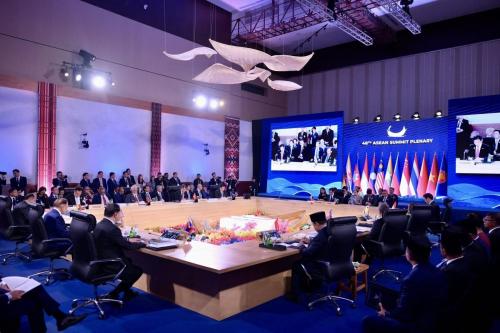




Foreign Affairs Office, The Government Public Relations Department
9 Rama VI Road, Bangkok 10400, Thailand
Tel : (+66) 2618 2323


