

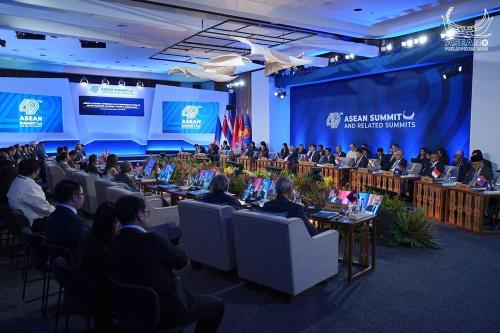
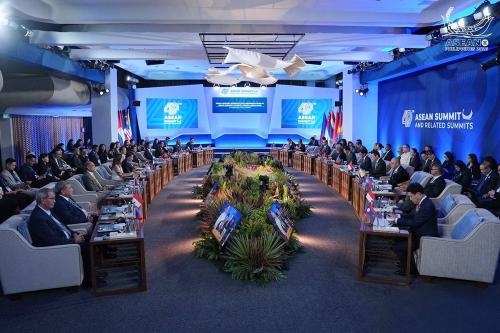
Prime Minister Anutin Charnvirakul attended the plenary and retreat sessions of the 49th ASEAN Summit, chaired by Mr. Ferdinand Romualdez Marcos Jr., President of the Republic of the Philippines, on 15 November in Manila, the Philippines.
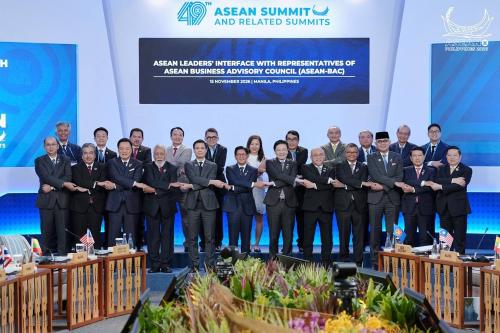
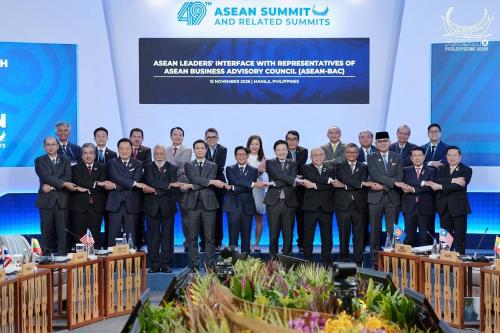
On the same day, he also participated in the ASEAN Leaders' Interfaces with the ASEAN Inter-Parliamentary Assembly (AIPA) and with the ASEAN Business Advisory Council (ASEAN-BAC) on the sidelines of the ASEAN Summit. Deputy Prime Minister and Minister of Foreign Affairs Sihasak Phuangketkeow also joined the Prime Minister in these meetings, according to a report from the Ministry of Foreign Affairs.
At the plenary session, the Prime Minister outlined three key priorities, namely (1) a united ASEAN, by deepening regional integration through the effective utilization of the ASEAN Digital Economy Framework Agreement (DEFA) and the Upgraded ASEAN Trade in Goods Agreement (ATIGA), (2) a resilient ASEAN, by advancing the ASEAN Power Grid, promoting the transition to renewable energy, and developing a strategy on AI for ASEAN, and (3) a people-centered ASEAN to promote people’s well-being through enhancing regional cooperation against online scams and on transboundary haze pollution towards a haze-free ASEAN, as well as realizing the full operation of the ASEAN Centre for Public Health Emergencies and Emerging Diseases (ACPHEED).
At the retreat session, the Prime Minister proposed ideas and exchanged views on key issues, including enhancing the effectiveness of ASEAN to ensure continuity across annual ASEAN Chairmanships, expanding cooperation with new partners, particularly the Global South, to strengthen ASEAN's strategic autonomy, advancing the implementation of the ASEAN Five-Point Consensus, as well as other regional and international issues, including the South China Sea, the Middle East, and the Thailand-Cambodia situation.
At the Interface with AIPA, the Prime Minister highlighted three priorities for strengthening cooperation between the executive and legislative branches in ASEAN, namely (1) digital security, through developing supportive regulatory frameworks to harness the benefits of the ASEAN Digital Economy Framework Agreement (DEFA), (2) regional connectivity, through aligning relevant laws and regulations to facilitate the movement of goods and services across the region, and (3) green growth, through advancing relevant regulatory frameworks to promote energy transition and investment in sustainable infrastructure. The Prime Minister also took this opportunity to provide clarifications on pertinent issues regarding Thailand-Cambodia situation.
At the subsequent Interface with ASEAN-BAC, the Prime Minister underscored the importance of strong public-private partnerships in advancing digital integration, and in leveraging the region's diverse resources into a competitive advantage in mobilizing capital, advancing technology, enhancing the added value of goods, and facilitating market access.
 Image




Foreign Affairs Office, The Government Public Relations Department
9 Rama VI Road, Bangkok 10400, Thailand
Tel : (+66) 2618 2323


