

Mrs. Nutthanun Rajanakorn, Executive Director of the Foreign Affairs Office at the Government Public Relations Department of Thailand (PRD), outlined the role of Thai media in preparing the public to respond to conflict, emerging threats, and the impacts of climate change. She emphasized that Thailand prioritizes early, preventive communication, so that people can adapt and stay safe by receiving accurate, timely, and easily accessible information.
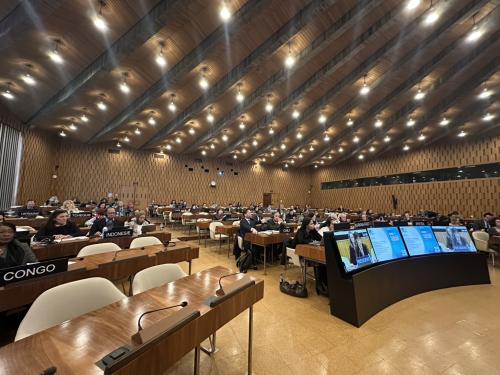
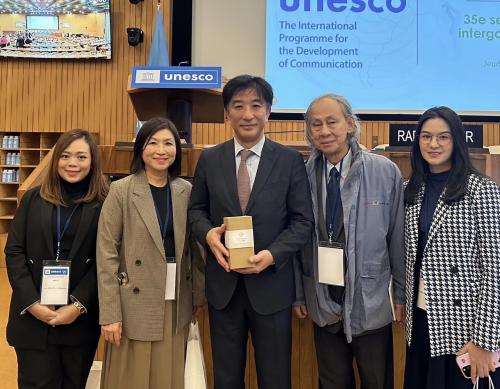
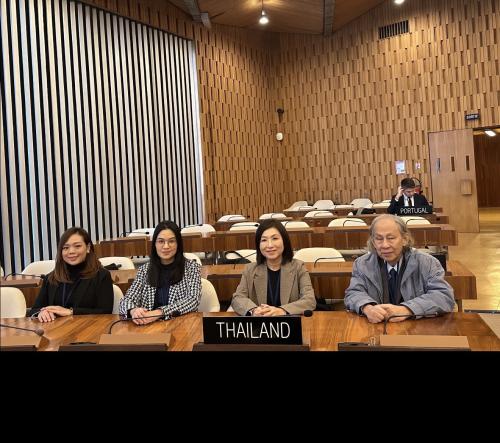
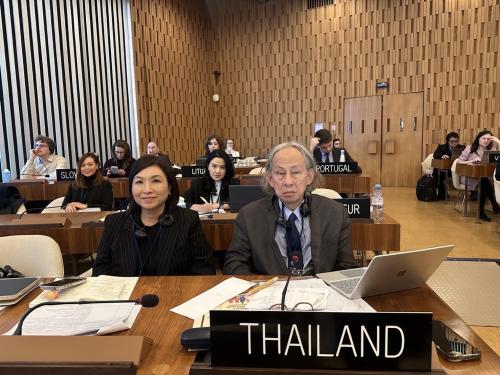
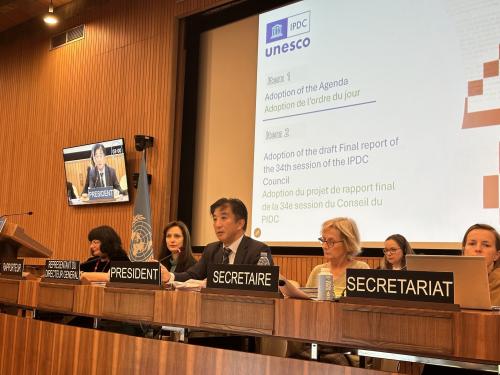
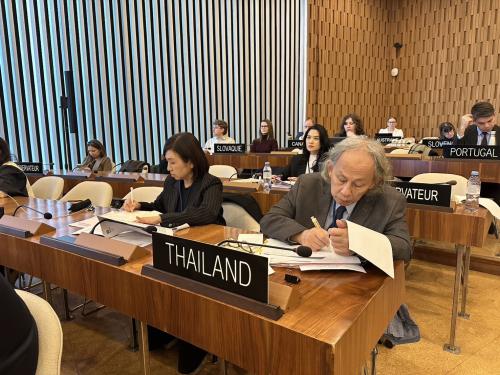
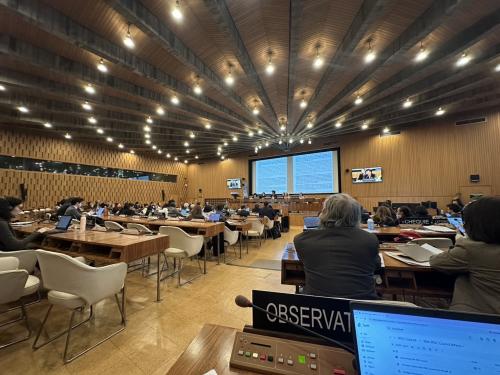
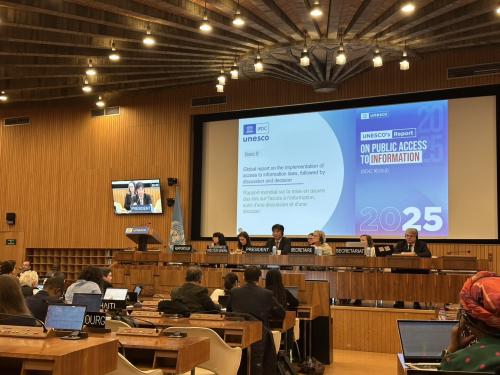
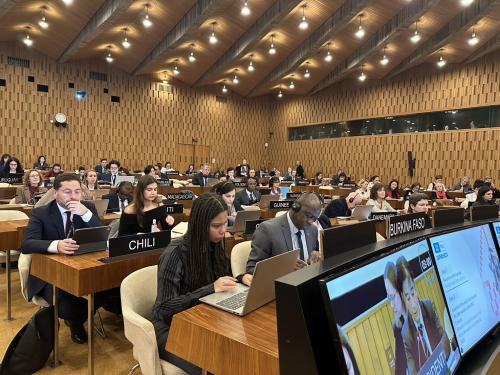
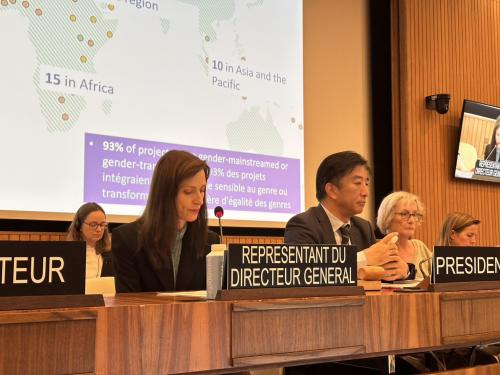
Mrs. Nutthanun shared Thailand’s perspective at the 35th session of the Intergovernmental Council of the International Program for the Development of Communication (IPDC), held on 19-20 November 2026 at UNESCO Headquarters in Paris.
Also participating in the session were Mr. Kavi Chongkittavorn, Media Professional, and PRD officials. They joined representatives from 37 Council member countries to discuss cooperation on communication development, media freedom, the safety of journalists, and the use of artificial intelligence (AI) in the media.
Citing the recent floods in Thailand, Mrs. Nutthanun said that the Government simplified its public messaging and warnings, so that people could understand what was happening, receive alerts in time, and know what action to take. The Government used a range of channels to reach affected communities, particularly community loudspeakers and local public address systems. She thanked the IPDC for its continued support for training Thai media professionals and reaffirmed Thailand’s commitment to working with the program to improve public communication both in everyday situations and during crises.
“Thailand recognizes the important role of the media in raising public awareness and strengthening people’s ability to respond effectively to various crises. For Thailand’s Government Public Relations Department, preparedness means equipping people with the knowledge and skills to respond to a myriad of threats and make informed decisions. Thailand strongly emphasizes early and preventive communication to provide timely and accurate information that is also easily accessible. During the recent flooding in Thailand, the Government greatly enhanced its crisis communication. Warning messages were simplified to increase public understanding and were delivered through all media outlets. In Thailand’s rural areas, local loudspeakers are the most effective media network to reach people in time,” Mrs. Nutthanun said.
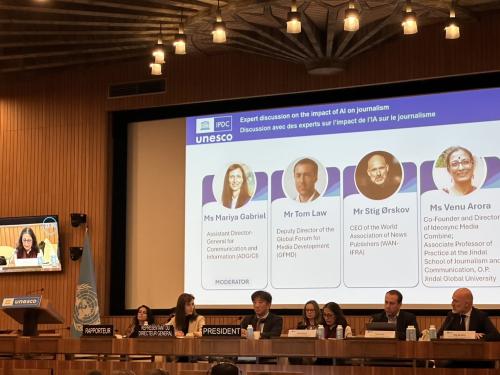
During the discussion on AI’s impact on mass communication, Mr. Kavi highlighted the importance of integrating AI into journalism and the role of the media in helping people adapt and respond to crises. He also called for fair treatment of news organizations when technology companies use their content, proposing that UNESCO coordinate cooperation among Member States on the issue.
Meanwhile, Mr. Takehiro Kano, Chairperson of the IPDC and Permanent Delegate of Japan to UNESCO, stressed that cooperation among Member States could support journalist training, environmental reporting, and the protection of journalists in conflict zones – highlighting safety as a key focus of the meeting. For her part, Ms. Mariya Gabriel, UNESCO Assistant Director-General for Communication and Information, underscored the importance of upskilling young journalists and promoting women’s roles in the media. She called for the ethical use of AI in journalism, emphasizing human fact-checking.
As a Council member, Thailand helped shape the direction of media development and exchanged experiences with other Member States, enabling the PRD to apply these insights to elevate public communication to international standards and keep pace with technological change.
 Image




Foreign Affairs Office, The Government Public Relations Department
9 Rama VI Road, Bangkok 10400, Thailand
Tel : (+66) 2618 2323


