


Speaking at a recent seminar on safeguarding the Party's ideological foundation in public administration and national governance, experts argued that difficulties encountered during the first year are typical of major institutional reforms rather than evidence of policy failure.
The seminar took place as Vietnam continues implementing one of its most significant governance reforms in decades, aimed at streamlining the political system, improving public administration and enhancing national governance.
Transitional challenges are expected
Officials acknowledged that the new governance model still faces several transitional bottlenecks.
These include differences in administrative capacity among local authorities, incomplete institutional arrangements in several policy areas, adjustments to responsibilities and decentralisation mechanisms, limitations in digital infrastructure, and delays in handling surplus public assets, office reorganisation and the digitisation of administrative records.
According to participants, such issues are natural during a large-scale institutional transition but have been exaggerated by hostile organisations and opportunistic actors seeking to undermine confidence in the reform.
Governance reform requires a new development model
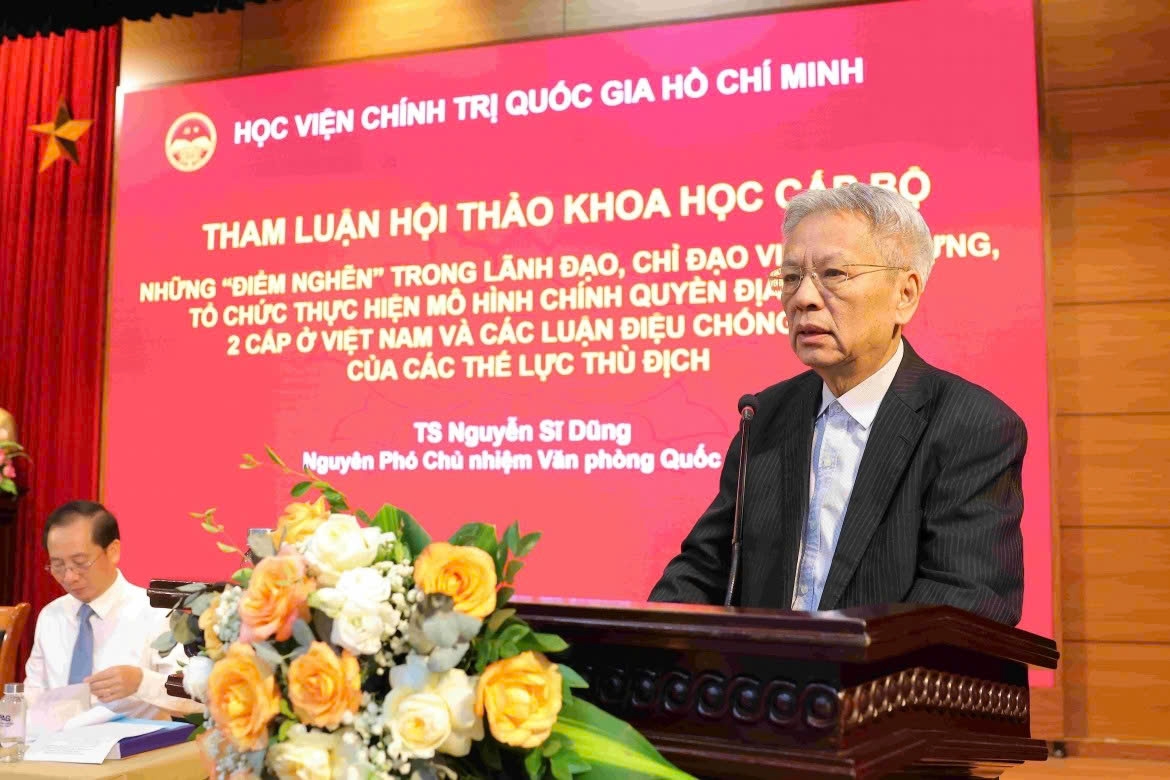
At the seminar, Nguyen Si Dung, former vice chairman of the National Assembly Office, addressed several criticisms directed at Vietnam's governance reform. One common argument portrays the reform as an unnecessary attempt to fix something that isn't broken.
Dung rejected that comparison, arguing that while the previous governance model had functioned, it was designed for a different stage of development.
“In today’s era of digital transformation, globalisation and artificial intelligence, maintaining the old governance model would not enable Vietnam to achieve the development goals set for 2030 and 2045,” he said.
He also dismissed claims that the implementation challenges demonstrate the reform is failing.
According to him, every major institutional reform involves an adjustment period before its benefits become fully apparent. He cited Vietnam's economic reforms launched in 1986, noting that many of their most significant results only became visible years later as institutions gradually adapted to the new development model.
“The current reform is even broader than the first wave of economic renovation. The challenges we are seeing today are transitional rather than structural,” he said.
Dung affirmed Vietnam had chosen the right direction if it intends to build a modern governance system capable of supporting long-term national development in the era of the Fourth Industrial Revolution and artificial intelligence.
Modern governance strengthens national resilience
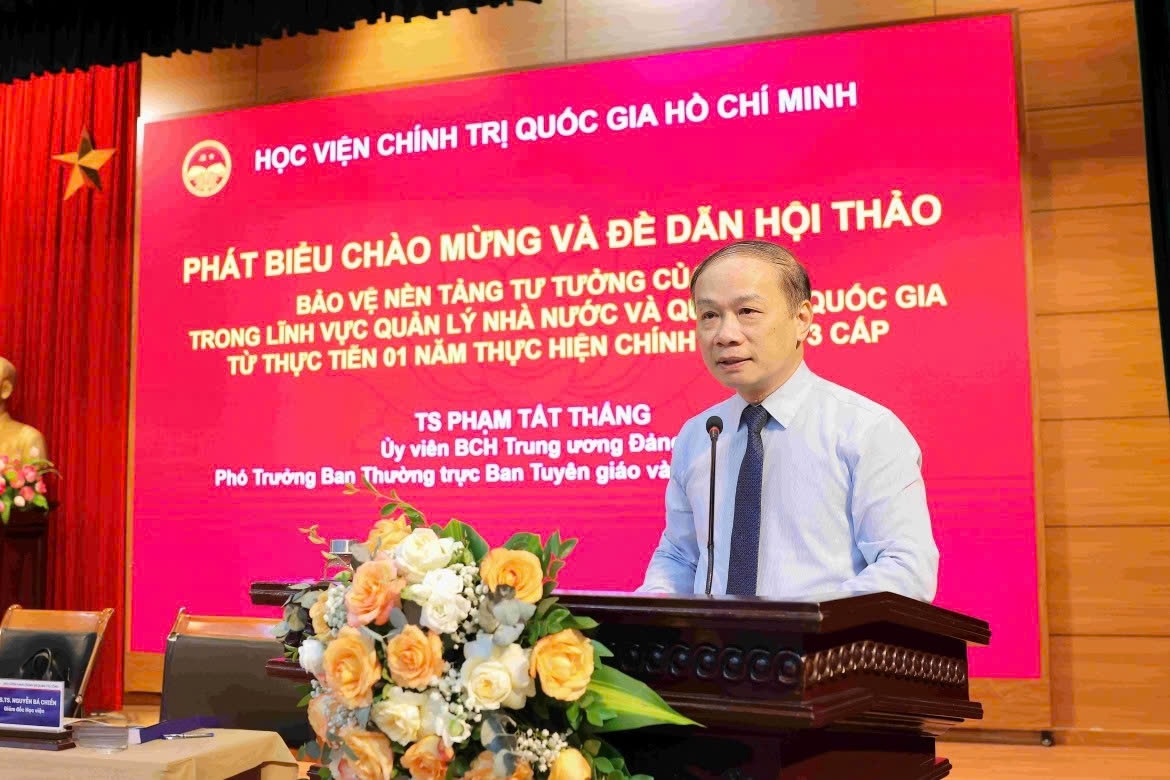
Pham Tat Thang, member of the Party Central Committee and deputy head of the Party Central Committee’s Commission for Information, Education and Mass Mobilisation, emphasided that the 14th National Party Congress marked an important shift toward modern and effective national governance.
According to Thang, the reform represents a transition from a traditional administrative model toward a governance system that is more transparent, digitally enabled and centred on citizens.
He acknowledged that such transformation inevitably encounters institutional bottlenecks, making governance reform a frequent target of misinformation and politically motivated criticism.
However, he said continued efforts to improve institutions, accelerate digital transformation and streamline the state apparatus would help build a governance system that is more efficient, transparent and service-oriented.
“A modern and effective governance system will become the strongest safeguard for the Party's ideological foundation and at the same time create favourable conditions for Vietnam's long-term development,” Thang stressed.
Practice provides the strongest evidence
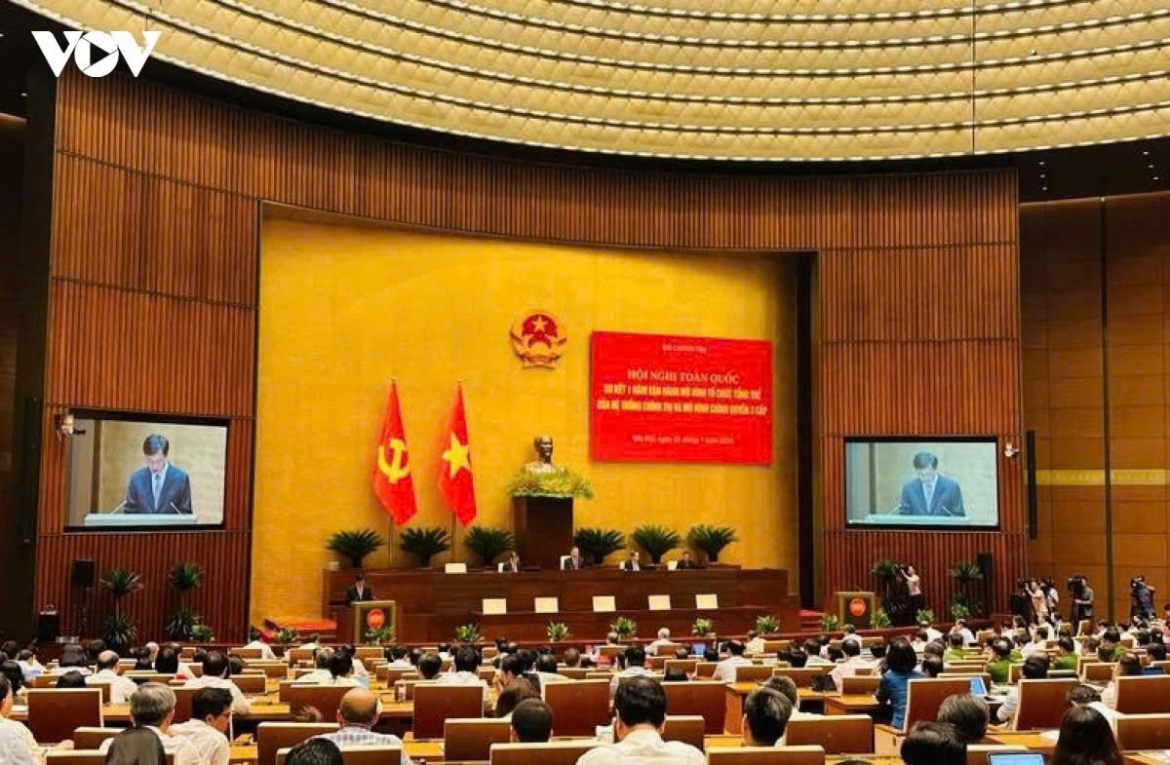
Officials agreed the most convincing assessment of the reform comes from practical implementation.
On July 1, 2026, the Politburo convened a nationwide conference in Hanoi reviewing one year of operation under the country’s three-tier government model. Reports presented by ministries, sectors and localities highlighted improvements in administrative operations following the restructuring, alongside identifying areas requiring further institutional refinement.
Addressing the conference, General Secretary and State President To Lam reaffirmed that streamlining the political system to improve efficiency, effectiveness and performance was a strategically important decision for Vietnam's future development.
He described the reform as one of the most comprehensive institutional overhauls undertaken in recent years, affecting virtually every level of government and public administration.
According to the top leader, the initial organisational restructuring has largely been completed, with the next phase focusing on improving operational quality, public service delivery and the development capacity of the new governance model.
After one year of implementation, officials said the reform has demonstrated its strategic direction despite ongoing transitional challenges. Rather than indicating failure, they argued, the remaining bottlenecks provide a clearer basis for further institutional improvements while reinforcing the long-term objective of building a more modern, efficient and citizen-centred governance system.
 Image
Image 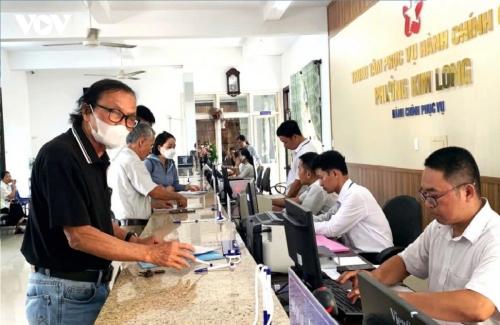




Foreign Affairs Office, The Government Public Relations Department
9 Rama VI Road, Bangkok 10400, Thailand
Tel : (+66) 2618 2323


