
Prime Minister and Minister of Interior Anutin Charnvirakul stated that dialogue with Cambodia can only begin when the Cambodian side removes troops, arms, and explosives along border.
According to the Prime Minister, formal talks with the Cambodian government have yet to be scheduled, but utmost priority remains clear: protecting sovereignty. Decision-making has been authorized to the military, through the National Security Council, and since martial law has been imposed in the area, decisions can be made by the Commander of the Second Army Area.
Although there will be a change of command after the end of September, the new Commander is already in the area, and a smooth handover of duties is expected. Moreover, the newly appointed Deputy Minister of Defense Lieutenant General Adul Boonthumjaroen is also a former Commander of the Second Army Area, and would leverage his familiarity with the area to monitor the situation.
On the other hand, Thailand's diplomatic stance remains unchanged. Dialogue can only take place after Cambodia removes dangerous weapons, explosives, and troops it has deployed to exert pressure along the border. Border checkpoints will remain closed until threats imposed by the Cambodian side are eliminated.
The Prime Minister reaffirmed that the country would cede no territory nor compromise national interests. Thailand will not commit to any dialogue with Cambodia and will intensify its measures in response to the latter’s recent deployment of heavy arms and drone incursions across borders. Not just closing the borders, but suspension of public utility services may be considered.
While Thailand has strictly adhered to and has never gone against the resolutions from all related meetings, the fact that Cambodia has failed to comply with even the first of the five agreements reached at the most recent General Border Committee (GBC) meeting clearly shows which party is violating the agreement. This is justification enough to convince the third-party mediators to press for Cambodia’s compliance with the agreements made at both the GBC and several other bilateral meetings.
Evacuation preparedness is also important. The Permanent Secretary to the Ministry of Interior has been instructed to urgently prepare shelters for evacuation. Financial compensation payments are already in the pipeline, and the process will be expedited after the Government's policy statement is delivered.
 Image
Image 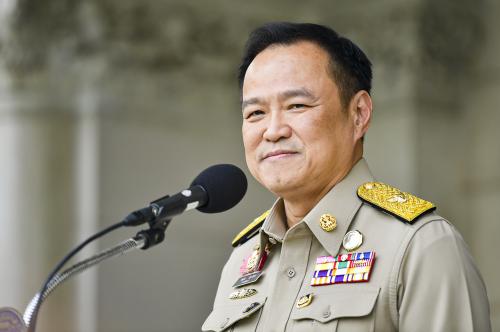



Foreign Affairs Office, The Government Public Relations Department
9 Rama VI Road, Bangkok 10400, Thailand
Tel : (+66) 2618 2323


